Living record · Lydia Lee, Exhibition & Experience Design MA · Faculty Research Space
What It Takes to Leave Your Home
A shadow lantern for one section of an immigration story. A ring of paper cutouts that never moves, and a core of programmable lights that performs them like a drone show: a girl walking, a girl becoming someone else, a girl gone.
In progress
Last updated
Session 02 of the build
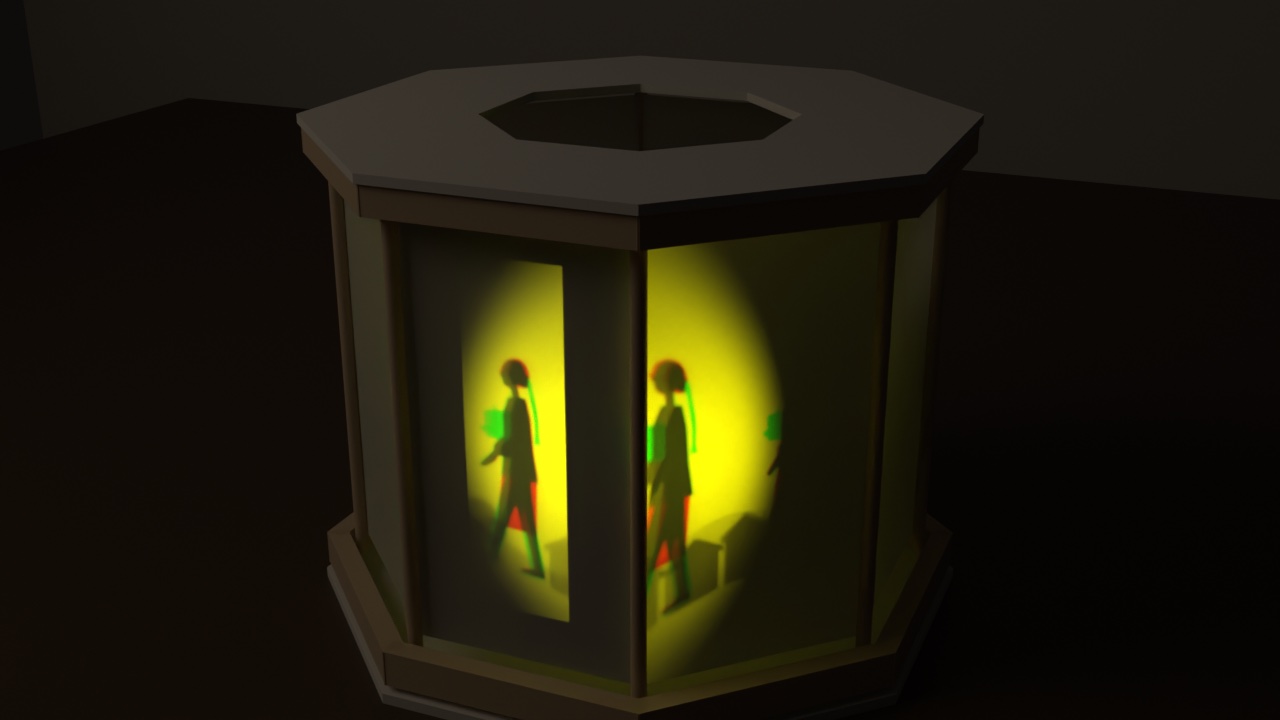
The shadow drone show in her lantern, rendered in Blender (38 s). Nothing turns: every cutout on the ring is still, and NeoPixels on the core perform their shadows. The camera walks round with her; the inset shows which cutouts and pixels are lit, and where you stand.
01
Vision
The section is called What It Takes to Leave Your Home. A recorded narration tells of a young woman, the eldest of four, growing up in a farming village in Toisan while warlords feud over the land. Neighbors talk about Gaam San, Gold Mountain, a faraway country Chinese people are barred from entering. On the night of the Mid-Autumn festival her parents explain a way in: she will take a new identity as the daughter of a merchant already living in the United States, and she will be questioned when she arrives. She is terrified. She goes.
The object telling it is a lantern, and that is not decoration. The turning lantern, 走马灯, the trotting-horse lantern, belongs to Chinese festival nights: a drum of cutouts turns over a flame and throws a procession onto the paper. This project stills the drum and moves the light instead. The cutouts are fixed, like a printed film that never changes, and a core of programmable lights performs them the way a drone show performs a picture in the sky: it can make her walk, stop, hesitate, look back, become someone else, and disappear while the village stays. Turning rings come back as world, not engine: a sky with a moon, a costume that arrives, a landscape that travels.
The history underneath the story is precise. The Chinese Exclusion Act of 1882 barred Chinese laborers but exempted merchants and their families, which is why a merchant's daughter was a door that could open. Families coached children through invented histories for interrogations like those at the Angel Island Immigration Station. The lantern's two identities, printed in two inks on the same frames, are that history in optical form.
02
Where it started
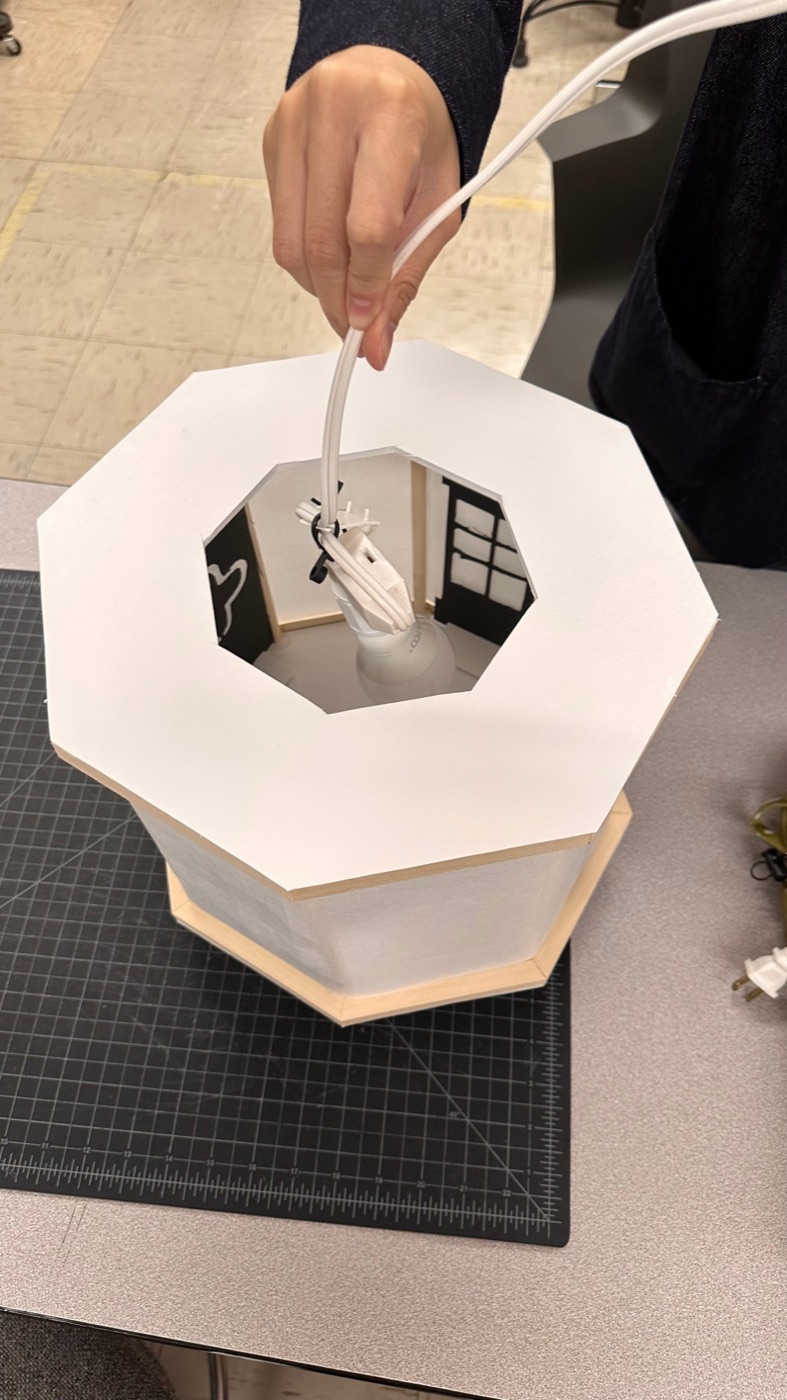
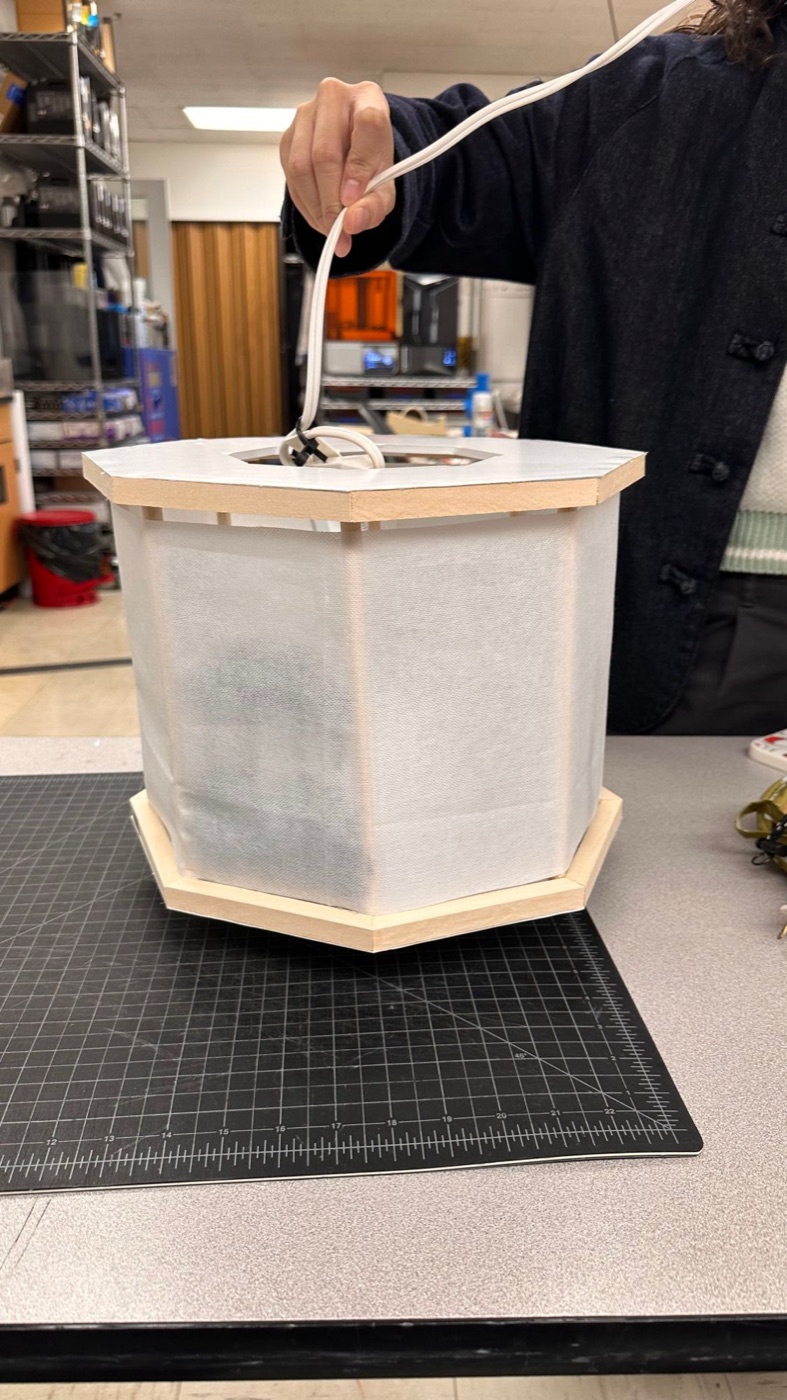
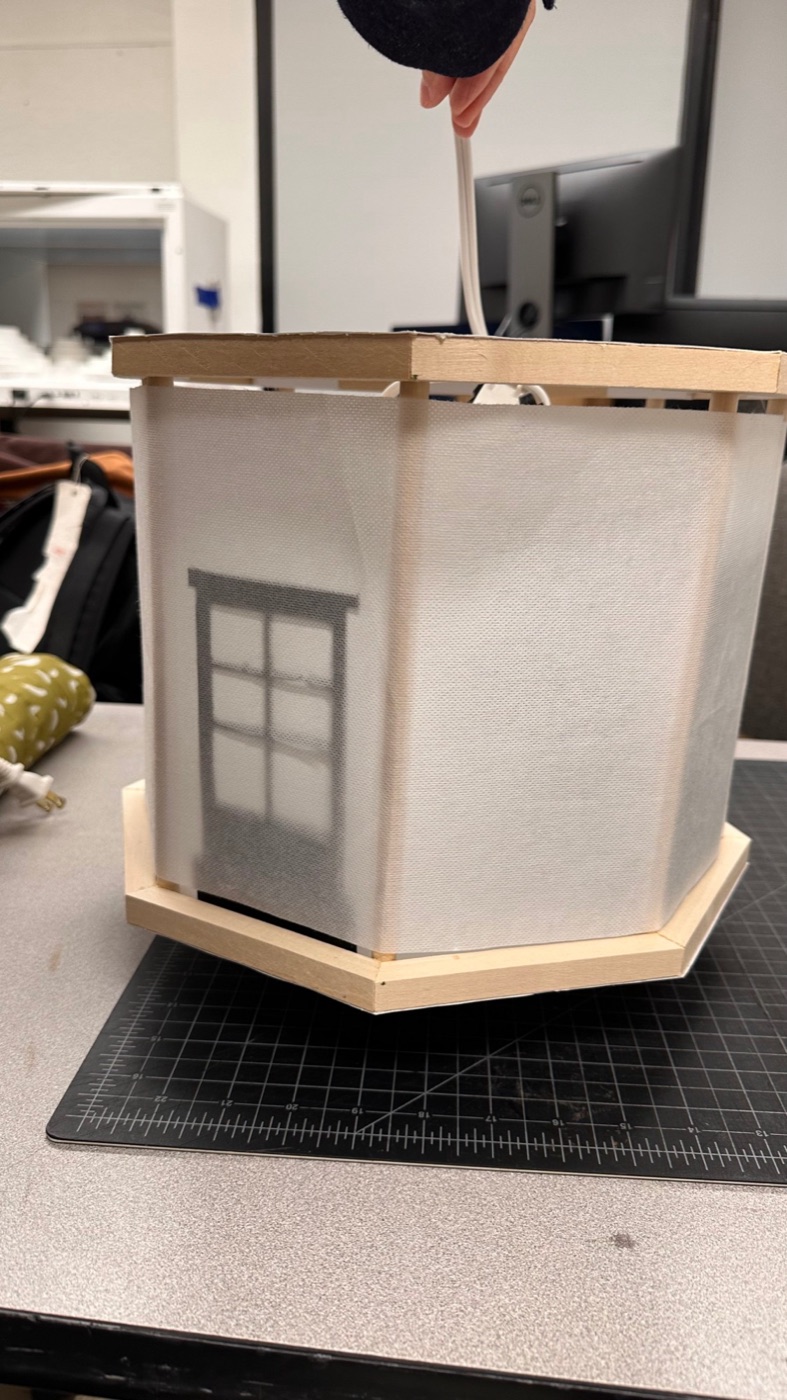
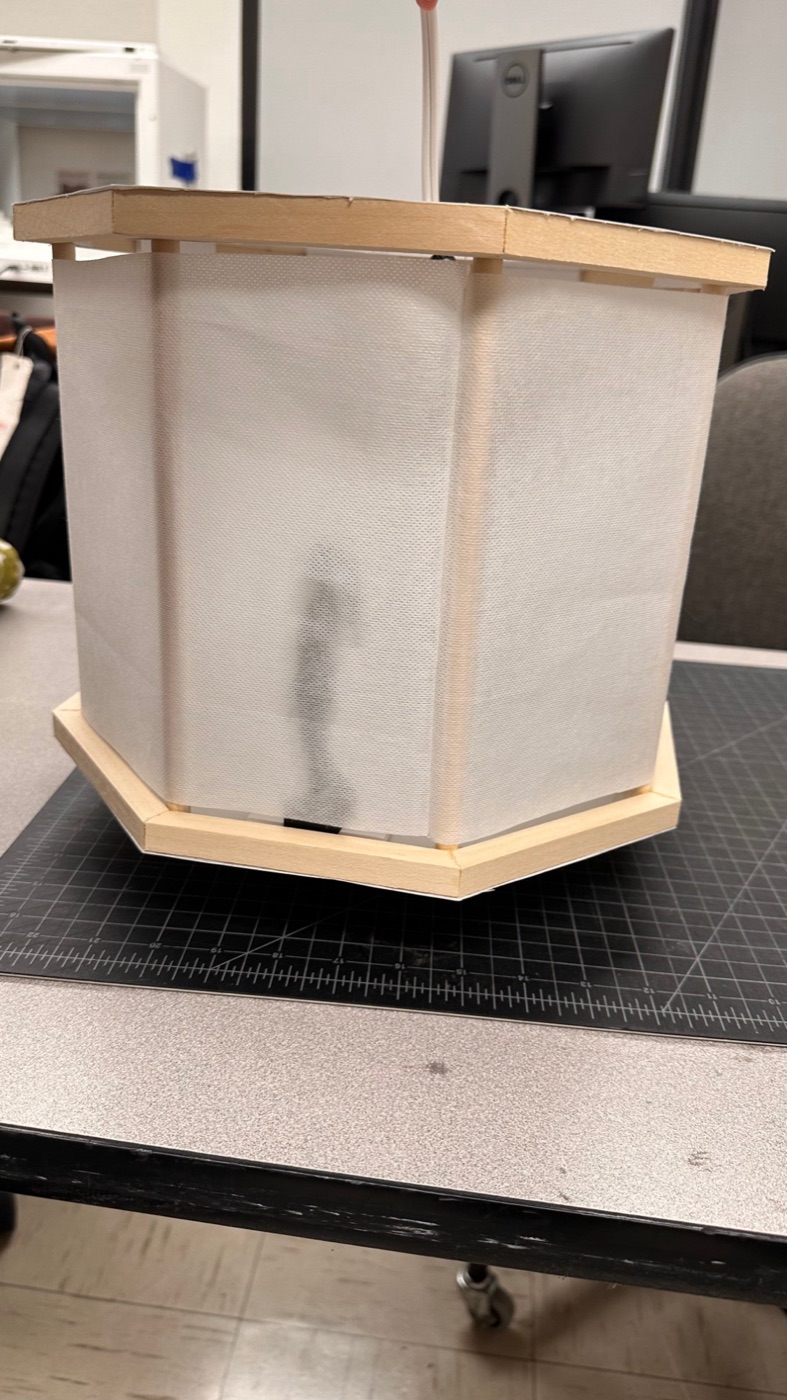
Lydia Lee arrived with a motorized, octagonal lantern: a basswood frame, a white non-woven skin, a foam-board top, a frosted LED bulb hanging in the center, and black card panels with cutouts, including a six-pane window.
The first lesson was already in her photos. The window cutout sat close to the skin and threw a crisp shadow; a figure further in turned into a soft ghost. Distance from the screen controls sharpness. That became a tool for depth, not a defect to fix.
03
Progress log
Newest last. Each entry names what changed in the design and why.
Procession or animation?
A turning drum alone gives a procession: figures march past. Animation in one place needs something that samples the turning, a shutter or a strobe. First recommendation: a strobe synced to the drum.
Two screens, one motor check
The skin is a soft screen; the room's walls are a sharp one if a window is left open. Display-turntable motors turn at 1 to 5 RPM, far too slow for a strobe, so the motor became the first thing to measure.
First simulations
A build diagram and a 30-second simulation: procession, the blur at speed, the strobe, switching LEDs, colored shadows. Then a single fixed window, so one bird runs through its whole cycle in one place.
Her lantern, and concentric layers
Photos showed eight sides, not six, and a platform that already turns. Concentric layers turning at different speeds came next: parallax, counter-rotation, and moiré. An early interactive model let us test them.
The script arrives; the walker is drawn
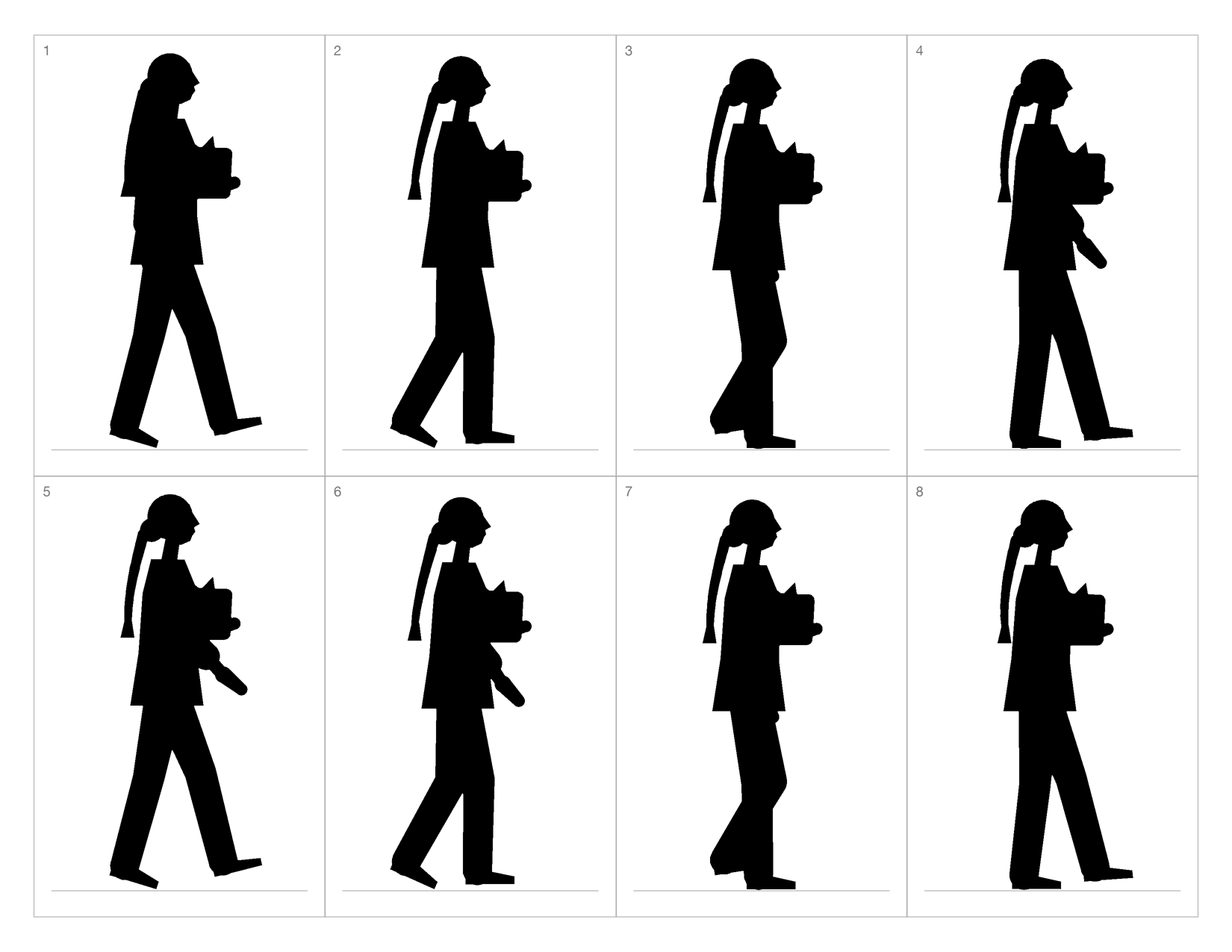
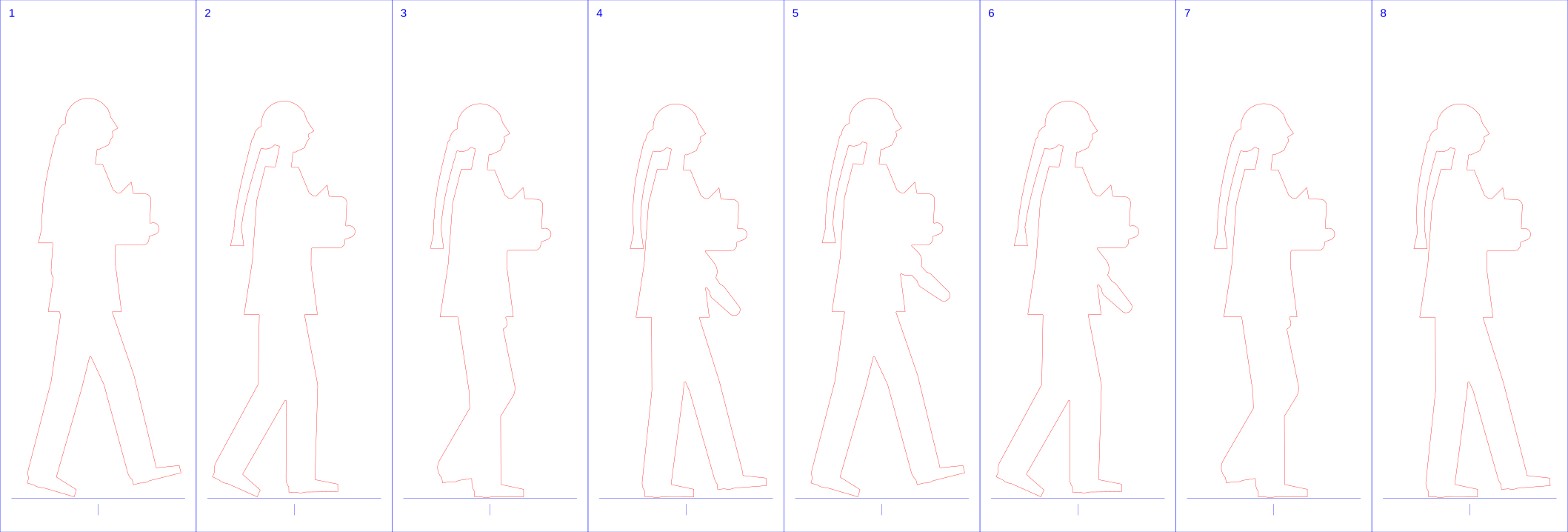
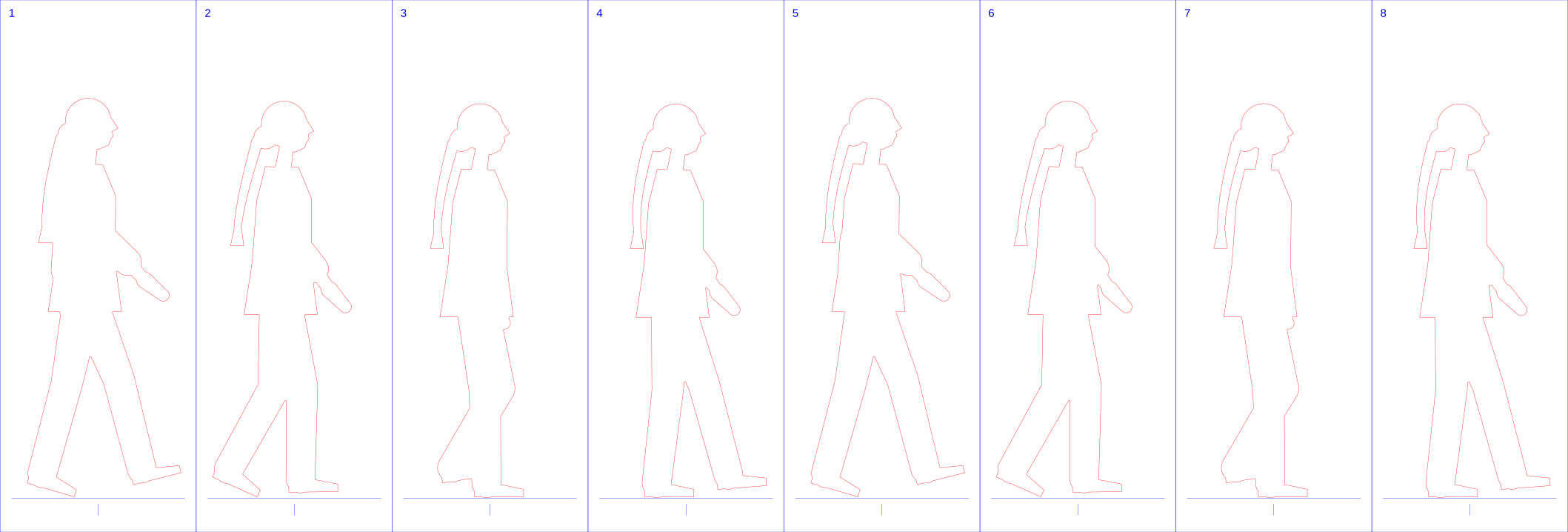
The figure became the narrator: a young village woman in a samfu jacket and loose trousers, a single braid, a cloth bundle held to her chest. An eight-pose walk cycle, exported as true-size cut files and printable transparency sheets.
The village ring
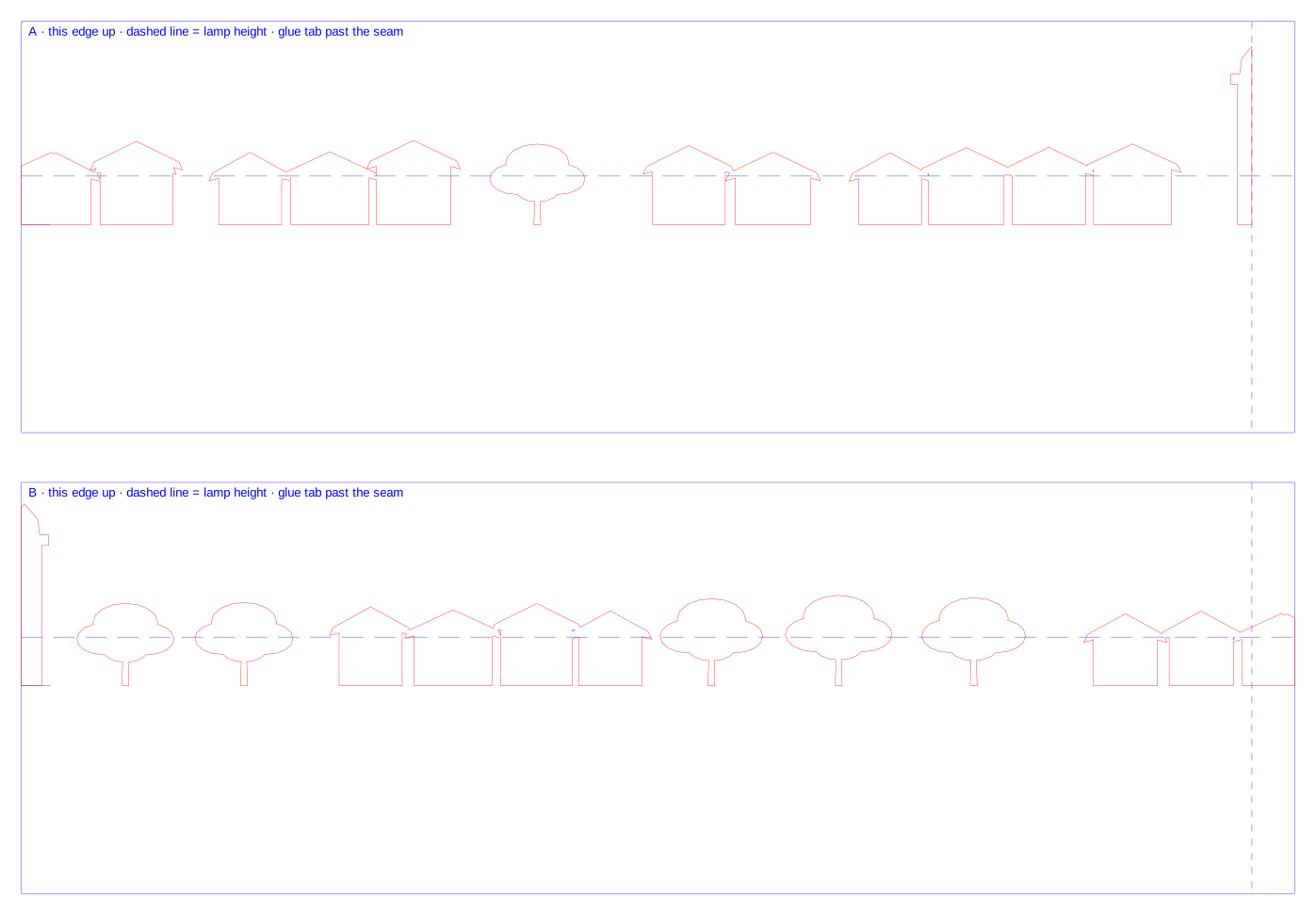
A slower ring turning the other way carries the village (paddies, houses, banyan trees, diaolou watchtowers) cut from one and two layers of rice paper. Under the strobe she walks in place while home slides away behind her.
No strobe: the light becomes the claw
The turn of the project. Instead of flashing at a moving drum, a row of lamps follows a moving picture and hands off to the next one. The light is never off, nothing flickers, and the light can stop, slow, reverse or let go.
Color tracks
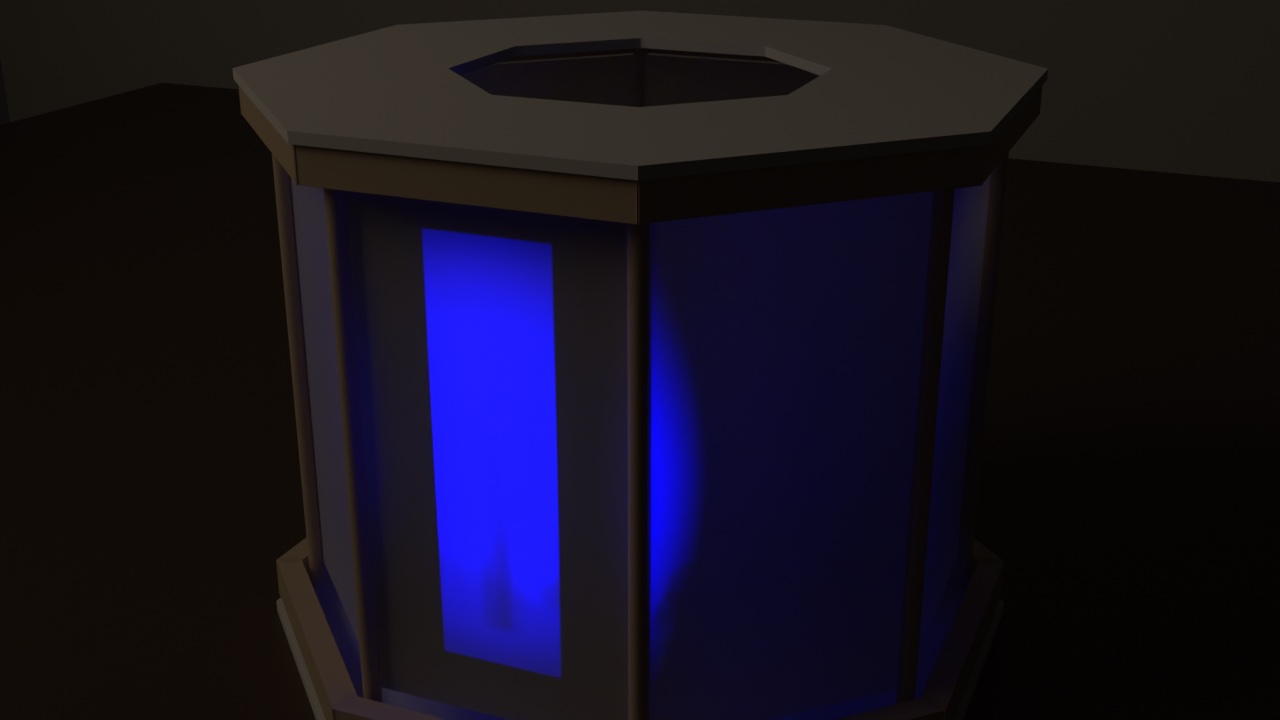
Each frame carries two identities in two inks. Red light shows the cyan-ink village girl; green shows the magenta-ink merchant's daughter; blue passes both and leaves only the paper village.
NeoPixels as the instrument
One strip of addressable LEDs does every technique: parade, walk, hold, change identity, vanish, and strobe if wanted, all switched in code and timed to the narration.
Her lantern, in situ
The lantern rebuilt in Blender at her dimensions, rendered with real light transport: a 20-pose walk on a picture ring around an 18 cm NeoPixel core, crossfading pose to pose for smooth motion. A first render left her visible under blue light because the simulated LEDs were not pure colors; with pure red, green and blue she disappears as the ink theory says she should.
Calmer, then still
The in-situ render read as strobey. A calmer version slowed both rings to a mobile's pace, but the real problem was the premise: the picture was still the engine. The color tracks were set aside; they obscured the show.
The shadow drone show
The base mechanic, decided. The ring of cutouts never moves. Each NeoPixel performs one shadow, the way each drone in a drone show performs one point of light: a gliding pixel slides a shadow, a handoff to the next cutout continues the motion, and several lights move together in formation. Rendered flat, then in her lantern.
Turning layers return, as world
Rings that turn are now scenery around the drone show. A sky ring carries the Mid-Autumn moon as a hole; a costume ring brings the paper daughter's outline, hat and dress onto her shadow and stops. Three landscape rings on one hub give true parallax from one motor: village, shore, sea, and Gaam San.
A vocabulary for the light
Fading, gliding and handing off were only the start. A reel of six techniques on the still cast (focus pull, many into one, echo, hesitation, breath and flame, rise and sink) and the night her parents explain the plan, played with all of them. One idea failed the geometry: light from the side makes shadows narrower on a cylinder, not longer, so there is no dusk stretch.
04
The base mechanic: a shadow drone show
Every cutout in the show stands still on one ring: home, her parents, sixteen frames of her walking, the boat. A NeoPixel behind a cutout throws its shadow onto the skin. That is the whole instrument. Like a drone show, the art is in the choreography of points of light.
Glide. Moving the lit pixel slides the shadow along the skin, the opposite way: about 20° of travel for a 10 cm core.
Hand off. Past that reach, the light crossfades to the next cutout, already drawn one step later. She walks around the lantern while nothing turns.
Formation. More lights, more performers: two lights join hers a pose behind, and three girls walk in step, then drop away.
Stage color only. Amber for home, warm white for her, sea blue for the boat: lighting, not ink tricks.
The choreography, unrolled: all eight panels, the 48 × 8 NeoPixel matrix lighting up, and a top view of which cutouts are lit (38 s).The same score in her lantern, rendered in Blender.
Rules the simulations found
Rule
Value
Why
Core, cast ring, skin
10, 12, 15 cm radius
A wide core close to the ring gives each pixel enough reach; magnification 2.5.
Reach of one pixel
about ±10° of shadow
Beyond it, hand off to another cutout.
Walk frames
15 to 20° apart
Closer, and a gliding pixel catches the previous frame and throws a ghost of her.
Pixel collar
about 55 to 60°
A short black collar or louver keeps each light on its own performer: one drone, one effect.
Pools
one per performer
Two lights on the same cutout make two shadows; lights that set the scene stay out of range of the actors.
05
A vocabulary for the light
Fade, glide and hand off are the alphabet. These are the words. Each one is only a choice of which pixels are lit and how brightly, so one cue table drives them all; none of them needs anything to move.
Nuance reel (82 s): six techniques, then the night her parents explain the plan. The strip under the skin is the NeoPixel matrix, unrolled beneath the part of the skin it lights.
Technique
What the pixels do
What you see
Focus pull
Her light is shared over a 5 × 5 cluster of neighbours, total brightness unchanged.
She goes soft, then sharp: home can blur into memory without fading. At 7 mm pitch the softening is stepped, like a multiple exposure; a frosted sleeve or a denser matrix smooths it.
Many into one
Five pixels, each at a fifth of the brightness, scattered around hers, glide together.
Five faint selves that gather into one solid girl.
Echo
Dimmer lights follow her a beat behind, each landing on an earlier walk frame.
Her past steps linger on the paper, like a drone's trail.
Hesitation
Two half-strength pixels start on her and pull apart, then rejoin.
She thins into two half-tone girls, one leaning toward home, one away, and comes back to herself.
Breath and flame
Slow swells of about 20%, plus an uneven flicker of a few percent and a tremble under half a degree.
Light that feels held by someone, not switched on.
Rise and sink
Her pixel slides about 1.5 cm down the core.
Her shadow lifts while home stays put; sliding back, she settles.
Tested and dropped: long dusk shadows. Lit from the side, a cutout's shadow on a cylinder gets narrower (2.5× down to about 2×), not longer. A long shadow would need a different caster, such as a cutout lying flat on a ledge, whose shadow stands taller as its light rises.
06
Turning layers: the world around the show
Rotation is no longer the engine; it is world-building. Rings that turn add sky, weather, costume and landscape around the still cast, and they are only ever seen where a pixel is lit. The world keeps turning in the dark; the lights choose when we see it.
F · The handoff and the moon
sky ring 11.5 cmcostume ring 13.5 cm
The sky is a short arc of dark card close to the lights, with the Mid-Autumn moon and stars cut out as holes. So near the light, a 12 mm hole becomes a soft 4 cm moon, and as its pixel glides down the matrix, the moon rises. A second ring near the skin carries the paper daughter: the merchant's daughter's whole outline in fine wire, with a solid cloche and flared dress. It turns, crosses the face of the moon, slides into her light and stops where the two outlines meet. She is wearing another girl's shape.
Method
Draw the silhouette she must become, subtract the one she has, and project the difference backwards from her pixel onto the costume ring: that gives the cut shapes.
Watch
Shadows only add. Anything the new identity hides (her braid) must be absent from the start, so she wears her hair up. Overlap the pieces 1 to 2 mm, or a hairline of light shows.
The handoff and the moon, unrolled (38 s).
G · Parallax and environment
three rings, one hubone motor
Three world rings turn together on one hub at 4° a second. Their shadows still move at different speeds, set only by how far each ring sits from the lights: a multiplane camera from a single motor. The card's tone gives the atmosphere, because stacked shadows have no front or back: pale reads far, black reads near.
Ring
Radius
Shadow speed
Material and content
Near
10.6 cm
about 5×
Black card, bold shapes only (it is about 7 mm out of focus): reeds, branches, breaking waves.
Mid
13 cm
about 1.4×
Grey card: village, diaolou, paddies, swell, gulls, a junk.
Far
14.2 cm
about 1.1×
Pale tissue: hills, horizon, an island, Gaam San.
Her whole journey is laid out around the rings, so turning the hub is the travel. She walks through the village, her light hands her to a sampan at the shore, and the boat never moves: the sea does, and the boat's light bobs, so the near waves heave while the horizon barely shifts. Her existing motorized platform could turn the hub, with the cast ring and core hung from the top.
Parallax and environment, unrolled; the view walks round with her (38 s).07
Techniques
These came first, and remain tools and history; since 7 November the base is the shadow drone show above. Every technique has been simulated: the geometry in each video is computed, not drawn by hand.
A · Procession
steady lightslow turn
A single light, a turning drum: shadows march around the skin or the room. The traditional trotting-horse lantern. Nothing changes pose; everything travels.
Needs
Any light, any motor speed.
Gives
Parades, journeys, the world passing by.
B · Strobe zoetrope
one flash per panelflicker risk
Flash the light once each time a panel reaches the same angle. Every frame lands in the same spot one pose later, and the eye fuses them into motion. An open window or a fixed aperture isolates one figure.
Needs
About 8 to 12 flashes per second, flashes of about 1 ms, a Hall sensor and a magnet to time them, and a fast motor (about 75 RPM for 8 panels at 10 Hz).
Watch
Flashing between 3 and 30 Hz is a known seizure trigger; a public showing needs a strobe warning.
Procession, smear at speed, strobe, switching LEDs, colored shadows.One fixed window: one bird runs through its full cycle in place.
C · Depth by distance and paper tone
frosted bulb is a feature
A cutout close to the skin is sharp; one further in goes soft. Layers of rice paper make grey instead of black: one layer for distant hills, two for houses, solid black for the figure. Three tones read as near, middle and far without extra lights.
D · Concentric layers
multiplanecounter-rotationmoiré
Rings at different radii and speeds. The same direction at different speeds gives depth, like Disney's multiplane camera and Lotte Reiniger's layered glass. Opposite directions make figures meet windows on a rhythm set by their relative speed. Two fine slat rings turning against each other make large fast bands of light: water, wind, rain.
Her eight-sided lantern with her six-pane window as the fixed layer.Strobe plus a slower village ring: she walks in place while home slides away.
E · The walker
walk cycletrue-size cut files
Two identities sharing one gait so one can dissolve into the other mid-stride. The village girl: samfu, loose trousers, a single braid, a cloth bundle. The merchant's daughter: qipao, bob, cloche hat. Every frame shares one ground line and one center mark, or the walk jitters.
The village girl, eight frames.The merchant's daughter, same eight leg poses.08
The inversion of film
In a film projector, the strip stops in the gate and the light stays still. Here the strip of pictures never stops, and the light does the stopping. A lit pixel slides along to keep one picture's shadow in the doorway, then hands off to the next picture. Seen from outside, she walks in place. The light has become the projector's claw.
What the light can do that a strobe cannot:
Hold. Follow one picture, so a moving cutout looks frozen.
Dissolve. Fade from one picture's pixel to the next, so poses blend into each other instead of cutting.
Hesitate. Hold her, let her step, step her back: rubato inside a turning machine.
Release. Stop following, and she is carried away with the ring.
Overlay. Light two pixels and two frames stack in the doorway: her and the person she must pretend to be.
The constraint is reach. A pixel can only hold a picture over a limited arc of the ring's travel, so the ring's speed sets her normal pace, and the light bends that pace only within its reach.
Hold and hand off, rubato, red to green, and blue: the light lets her go and the village stays. The plot at lower left is the light's position: a sawtooth, the claw.09
Drive the lamp
Above: the lantern seen from the top, unrolled flat. Below: what you see on the lantern. Switch the lamp between staying still and following. Change its color. Hold her.
Interactive: a picture ring moving past a row of lamps
Lamp
Color
Ringslowfast
10
Color tracks
A colored ink is a filter: it stops one color of light and lets the others through. Print two identities on the same frames in two inks and the lamp's color chooses which one casts a shadow. A third ink makes a third track. Position picks the moment; color picks the story.
Light
Cyan ink (village girl)
Magenta ink (merchant's daughter)
Yellow ink (third track)
Grey paper (village)
Red
dark shadow
clear
clear
grey
Green
clear
dark shadow
clear
grey
Blue
clear
clear
dark shadow
grey
Red + green
green-tinted
red-tinted
clear
grey
In practice: dense inkjet inks on transparency, or Rosco cyan, magenta and yellow gels, lit with single-color LEDs near 625, 525 and 465 nm. Inks leak a little, which shows as faint ghosting; in a story about a double identity, the ghost is welcome.
Mid-dissolve, red plus green: both girls at once.Blue: she is gone; only the paper village stays.
The color-track version in her lantern (6 Nov, 24 s): a turning picture ring held still in a doorway, red to green to blue. Set aside on 7 Nov in favor of the drone show.11
Optical theory, plainly
Shadow size
magnification = (light→screen) ÷ (light→cutout)Core at 9 cm, cutouts at 12 cm, skin at 15 cm from center: (15 − 9) ÷ (12 − 9) = 2. A 6 cm cutout throws a 12 cm shadow.
Shadow sharpness
blur = light size × (cutout→screen) ÷ (light→cutout)Her frosted bulb (about 6 cm) with a cutout 3 cm from the skin and 10 cm from the bulb: about 1.8 cm of blur. A NeoPixel chip (about 1 mm) in the plan above: about 1 mm.
Following a moving picture
lamp travel = cutout travel × (light→screen) ÷ (cutout→screen)(15 − 9) ÷ (15 − 12) = 2: to hold a picture still, the lit pixel moves twice as far as the picture, in the same direction.
Reach and frame spacing
With this geometry a pixel can hold a picture for about ±11.7° of ring travel. Twenty frames sit 18° apart, so neighbors overlap in reach by about 2.4° on each side, and that overlap is where one pose crossfades into the next.
Pace
poses per second = ring speed ÷ frame spacingAbout 23 RPM (138°/s) ÷ 18° ≈ 7.7 poses per second: one full walk cycle each turn of the ring.
Pixel steps
Hopping one pixel shifts the shadow by the pixel spacing × (cutout→screen) ÷ (light→cutout). Dense strips and crossfading between neighbors keep the step below a few millimeters.
12
Design numbers for her lantern
From the drone-show plan of 7 November; to be re-run once the lantern is measured.
Part
Value
Why
Skin
octagon, 30 cm across, 23 cm tall
Her existing frame.
Cast ring
12 cm radius, still, a cutout every 15–20°
Home, parents, her walk frames, the boat: the whole cast, never moving.
Figures
5–6 cm tall → 12–15 cm shadow
Magnification 2.5.
NeoPixel core
10 cm radius, 48 around × 8 high
Wide and close to the ring, for about ±10° of glide per pixel.
Lit at once
1 to 11 pixels
One per performer; a crossfade briefly lights two.
World rings (optional)
10.6, 13, 14.2 cm on one hub
Near, mid and far: parallax from one slow motor.
13
The score
A small sound module plays the narration while the controller fires light cues on time, so the lantern performs on its own.
Narration
The light
Growing up in a farming village in Toisan
Amber lights perform home one at a time: tree, house, father, mother.
Warlords feuding over land
A fast near ring of banners sweeps huge, blurred shadows over the small, sharp village.
Gaam San, a land far away
On the far ring, in pale tissue, a mountain at the edge of one light.
The night of the Mid-Autumn festival
The sky ring brings the moon; its pixel sinks, and the moon rises.
Pretending to be a merchant's daughter
The paper daughter crosses the moon and locks onto her shadow.
Her decision to go
Everything stops but the sky. Home goes out light by light; the light carries her to the boat.
14
Build kit & files
Electronics
ESP32 or Arduino Nano, plus a small MP3 sound module and speaker for the narration.
A NeoPixel strip or ring, the 2020 size if available, wrapped around a tube at lamp height.
A Hall sensor and magnets on the turning platform, so the code always knows where the ring is (or a stepper motor).
5 V supply, a 300–500 Ω resistor on the data line and a large capacitor across power, per Adafruit's wiring guide.
Materials
Clear acetate or PETG band for the picture ring; transparency film for fast ink tests.
Rosco cyan, magenta and yellow gels, or dense inkjet inks on transparency.
Rice paper in one and two layers for the village; black card for the doorway panel.
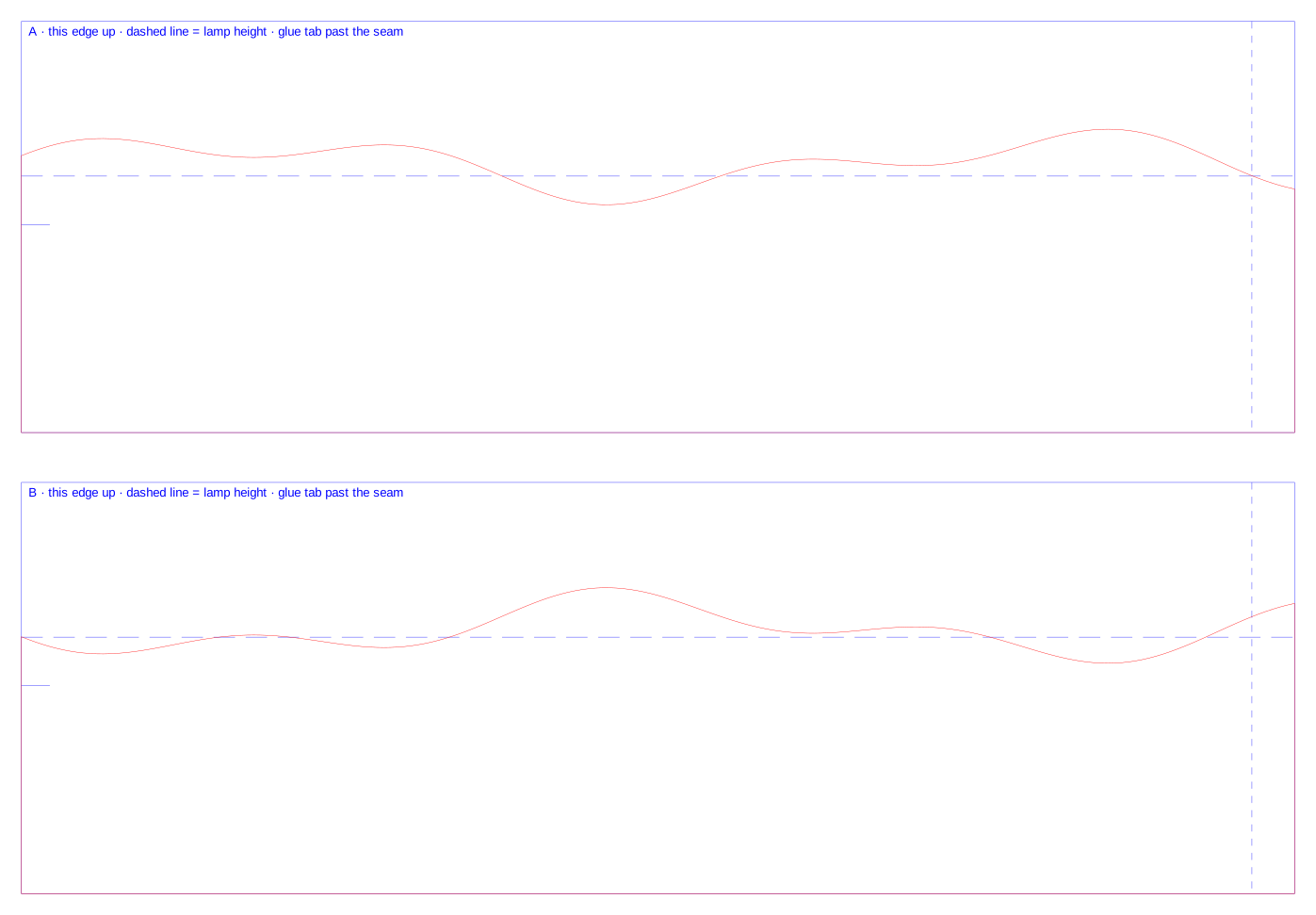
Red lines cut; blue lines are guides. The village ring is drawn for a 220 mm ring from the earlier strobe design and will be regenerated at the new ring size.
The village ring, unrolled.The walker behind her window under the strobe design.15
Lineage
Trotting-horse lantern (走马灯). The festival lantern whose drum is turned by the heat of its own flame. The direct ancestor.
Émile Reynaud, praxinoscope (1877) and Théâtre Optique (1892). Mirrors cancelled the motion of continuously moving pictures, with no shutter; the Théâtre Optique projected a moving strip of painted figures over a separate fixed background. The closest relative of this design.
Emil Mechau's projector (1910s). Rotating mirrors held a continuously moving film still: optical compensation instead of an intermittent claw.
Lotte Reiniger and the multiplane camera. Layers of glass at different depths and speeds, the root of the concentric-ring parallax.
Carnovsky, RGB. Prints in which red, green and blue light each reveal a different image: the color-track principle.
Mitra and Pauly, “Shadow Art” (SIGGRAPH Asia 2009); Kumi Yamashita; Tim Noble and Sue Webster. Objects that cast unexpected images, one object with many shadows.
The Chinese Exclusion Act (1882), “paper” sons and daughters, and Angel Island. The history the lantern is built to tell.
16
Next
Measure the lantern: skin radius, panel height, and the platform's steadiest slow speed for a world hub.
Prototype the instrument: a NeoPixel tube with a black collar or louvers, three cutouts on a still ring, and one light gliding and handing off between them.
Write the light score as cues against the narration: which pixel, how bright, what color, gliding where, for every second.
Cut the sky arc with its moon and the paper-daughter costume ring; test the lock at true size.
Decide the world rings: which scenes need a turning layer, and which are better as light alone.
17
Credits
Lydia Lee, MA Exhibition & Experience Design, Fashion Institute of Technology: concept, lantern, narration
Douglas Jay Goldstein, Program Lead, Emerging Technology and Innovation: advising, simulations, documentation
Faculty Research Space
Simulations: Python (geometry and shadow projection), Blender Cycles (in-situ render)