Faculty Research Space · FIT

Emerging Technologies
& Digital Production

18 worksOct 2025 — May 2026Made with AIFashion Institute of Technology

A season of student and faculty work built with AI as an instrument — dresses grown from fossils, museums without floors, stores you can play.

Mentorship, tooling & technical direction: Douglas Goldstein, Emerging Technology Coordinator

Talk to us about a project

No Experience Necessary · Workshops

Short, hands-on sessions for FIT faculty and students. Come with no experience and leave with the thing you made — a scan, a character, a film, a working site.

See all 5 workshops

Nintendo: Roadmap to 2030 — Playable Flagship Store

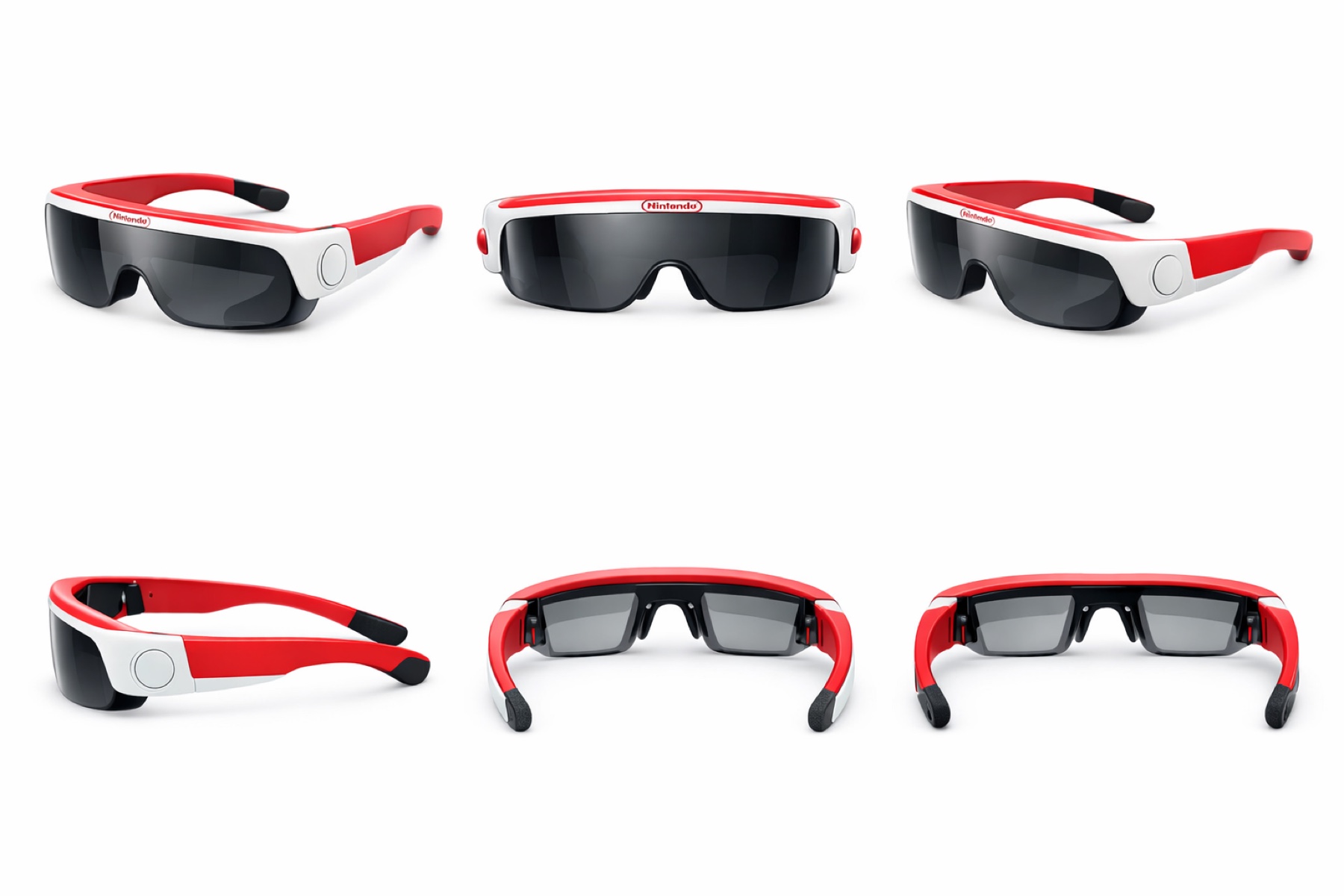
For the World Retail Congress Future Retail Challenge, reimagine the Nintendo NYC flagship as a 2030 'playable spatial layer.'

What it achieved — Exhausting many style-transfer techniques was the point: only a few held a coherent themed world across a full moving video, not just a single frame. The result let the team pitch a store concept that would have been prohibitively expensive to visualize any other way.

Phoebe Fusco, Jocelyn Howe, Nicole Vasquez Urday (Students, Fashion Business Management)

Read the case study

In Honor of What Was and Will Never Be Again

You pick up a stranger's VHS tape, feed it into the machine, and slip inside her childhood until the television dies and takes the room with it.

What it achieved — The VR work was finished — it runs end to end, the intensity float climbing its curve, the heartbeat interleaving with your own, the television dying and taking the room's light with it before the ghost lamps wake one by one. It was made for From Our Eyes, the FIT 2026 BFA Photography and Related Media senior exhibition at The Museum at FIT.

Elliot Gallicchio — artist: concept, source footage, and narration (senior thesis, FIT BFA Photography and Related Media)

Read the case study

Mirror Lab — Interactive Mirror Workshop

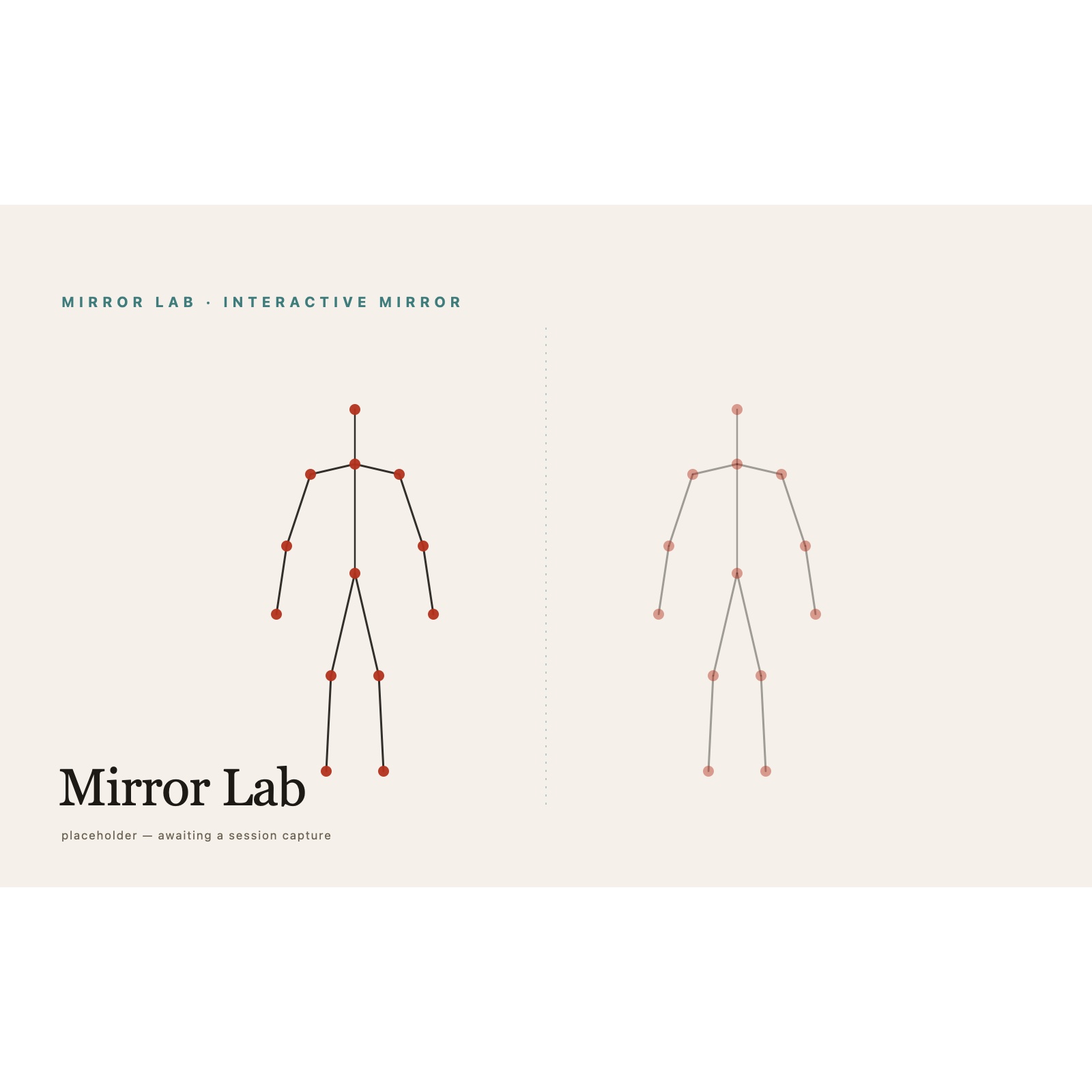
A browser-based interactive mirror — p5.js visuals driven by MediaPipe body tracking with Tone.js sound — built as a hands-on workshop, later doubling as a graph-theory course presentation.

What it achieved — Shipped as a public, reusable tool — a two-hour session anyone can run from a laptop with a webcam. The mirror went on to double as a graph-theory course presentation, proof that a workshop artifact can keep working after the workshop ends.

Read the case study

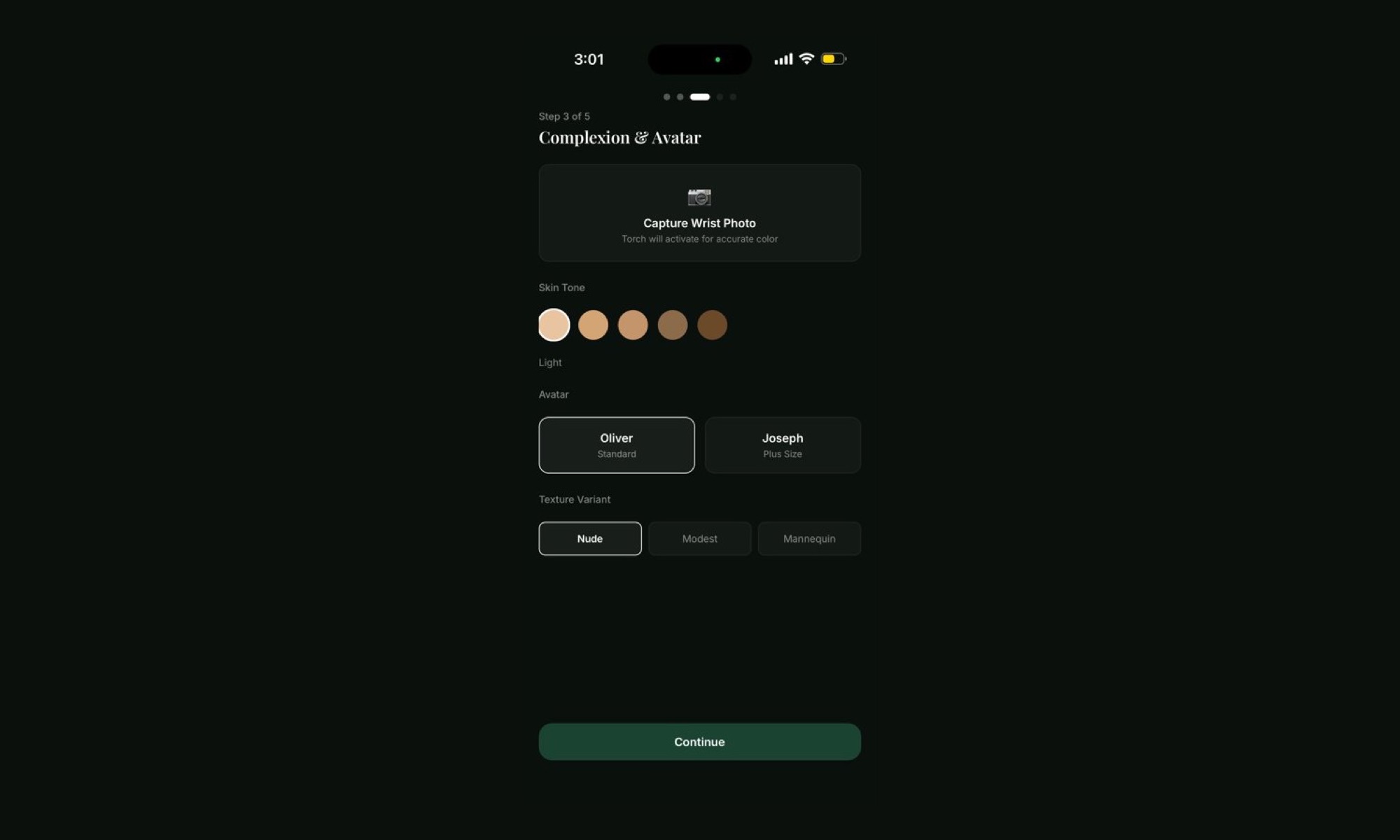
Bespoken — Bespoke-Garment iOS App

Build an iOS made-to-measure app (Bespoken) that turns a client's face + body measurements into a personalized digital avatar that models bespoke garments in VStitcher.

What it achieved — Validating the bake on a stand-in first de-risked the real client run — the pipeline from photographs and measurements to avatar is proven. The open piece is the last mile: a finished garment actually draped on the client's own avatar.

Brent Morales (Student, Technical Design)

Read the case study

DJ-Deck Garment

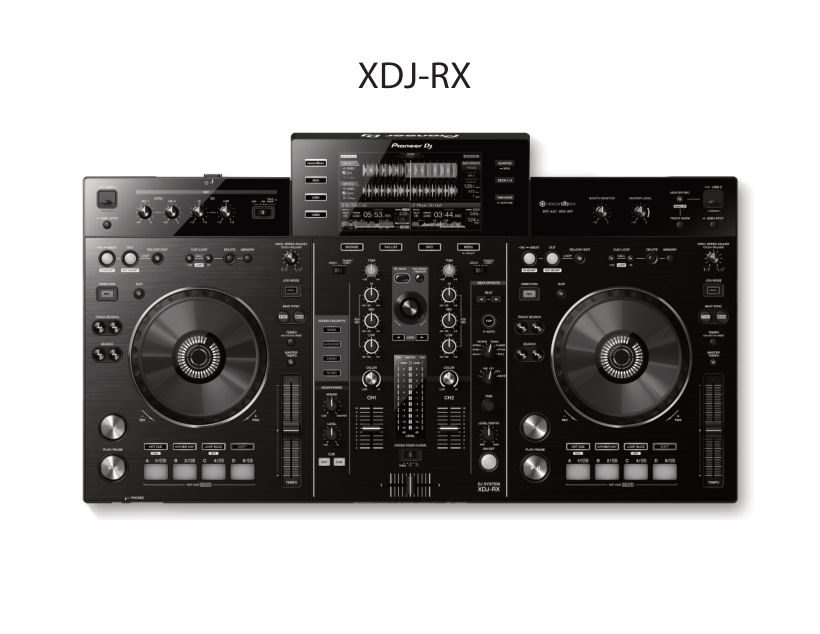
Reconstruct a Pioneer XDJ-RX DJ controller as wearable garment hardware — knobs, faders and jog wheels reborn as functional trims.

What it achieved — The move that makes it work: every DJ control becomes a real, manufacturable trim (snap-buttons, sliders, zipper pulls), not a printed picture of one. A compact AI-to-fabrication loop — reference sheets to styled render to printed part.

Irene Park (Student)

Read the case study

Gleam — Transformative Set Design Studio

Design a modular set-design studio and performance space where music, fashion, art, dance and theatre reconfigure the room itself.

What it achieved — A complete capstone: a brand identity, a visitor journey, and a spatial system where the room itself performs — recomposing for each artist who takes it over.

Bridget Cary (Student)

Read the case study

Planting a Dress, Printing a Tree

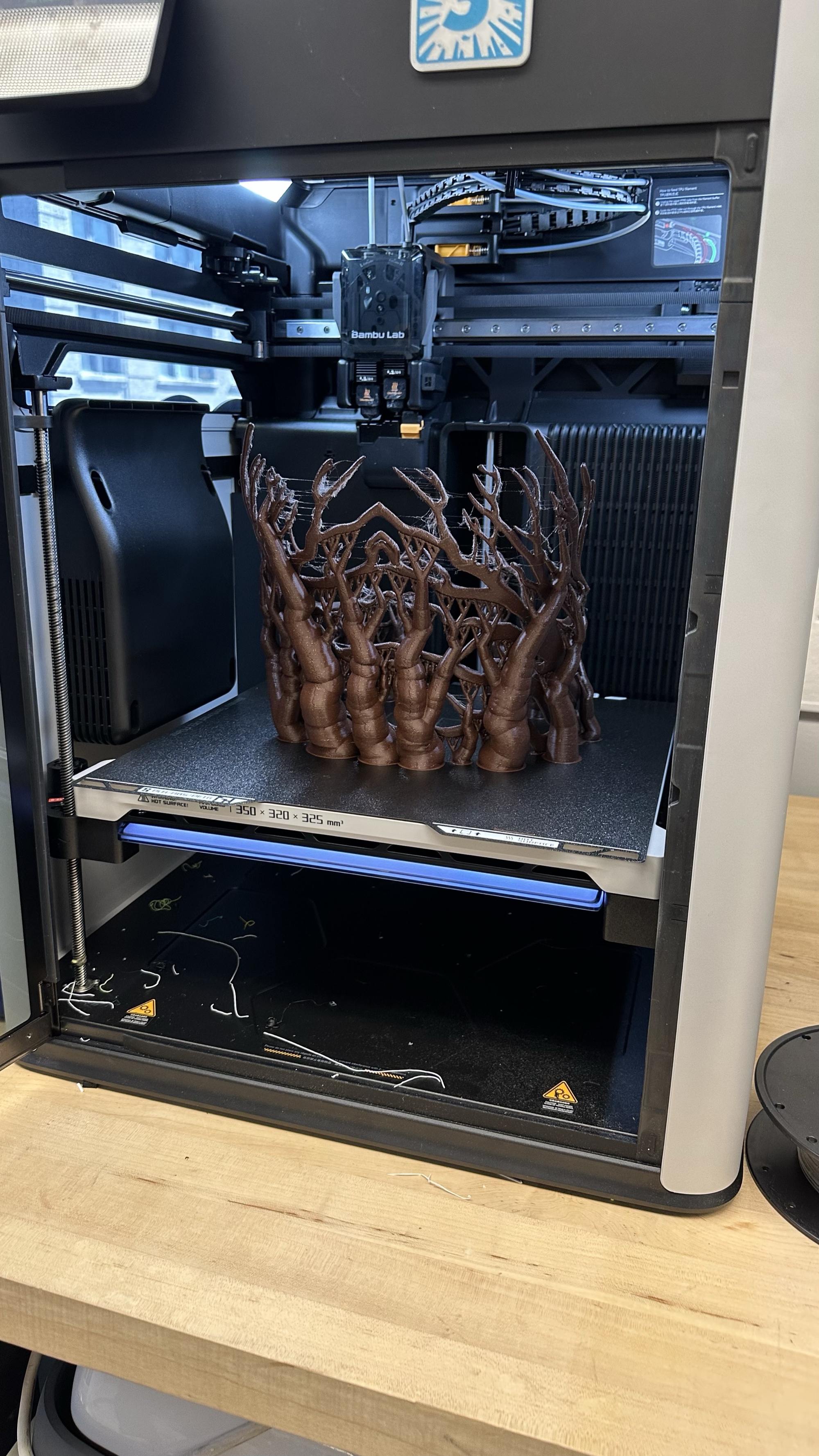
For a senior thesis confronting 'what's real anymore?', design couture that fuses the natural and the artificial — a gown overtaken by a forest that never grew.

What it achieved — WON the Devil Wears Prada 2 Design Competition (20th Century Studios · Who What Wear · Disney). Splitting flexible TPU (bodice) from rigid PLA (skirt) let one 3D-printed motif behave like fabric where it needed to — and the final tree structure is explorable as an interactive 3D model right on this page.

Noah Pesante (Student)

Read the case study

The AI IP Judgment — Avatar Theater for Fashion Law

Put an AI intellectual-property question on trial — three AI avatars argue the case as a piece of theater, staged for a fashion-law classroom.

What it achieved — The judgment played as a recorded lecture-performance — a classroom watching machine actors argue the law that will govern machines, with the argument's stakes embodied rather than assigned.

Carlos Bronzatto (Professor, Fashion Law)

Read the case study

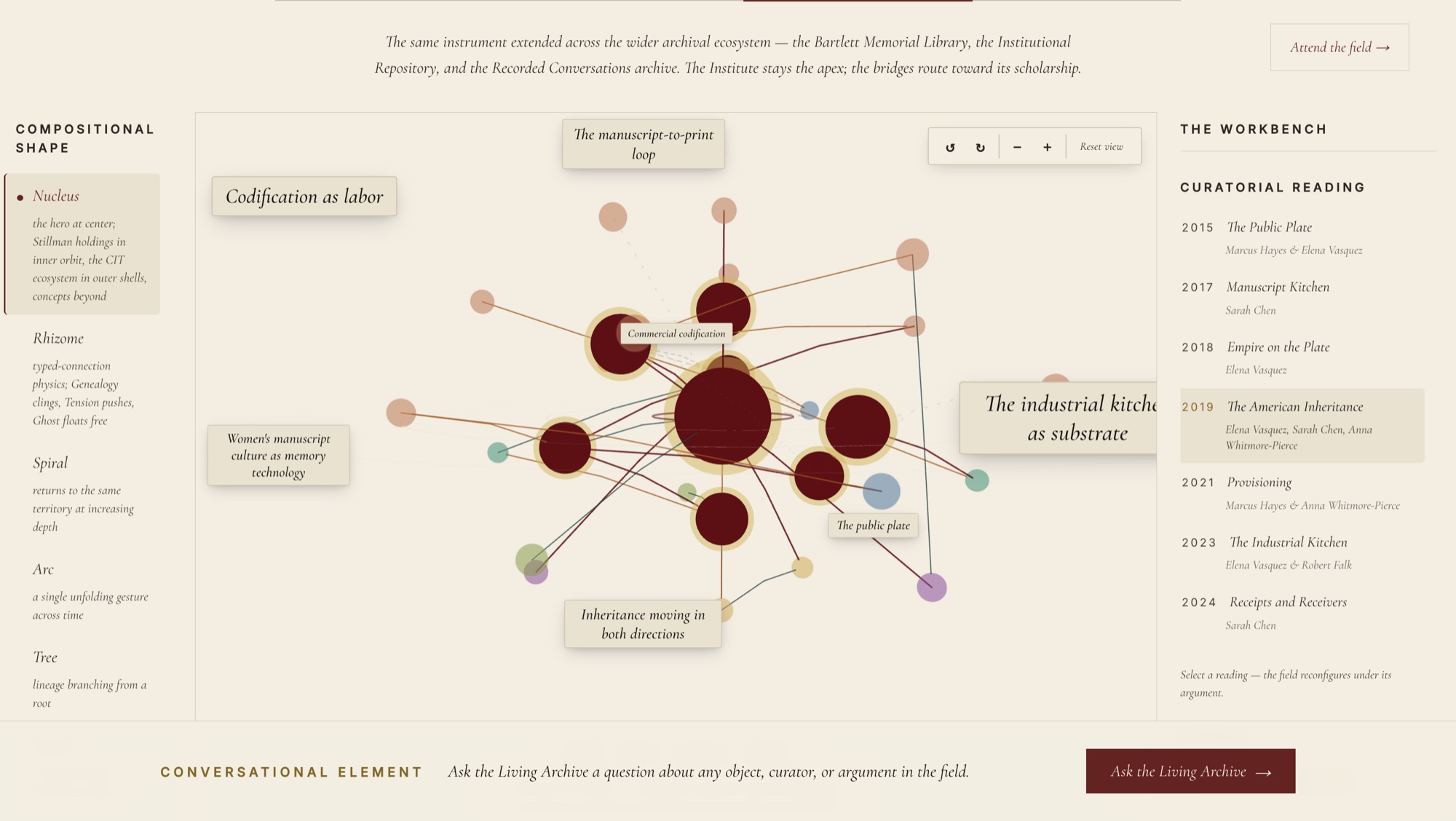
The FIT Living Archive — Internal AI Platform

Give FIT an internal AI platform that makes its archives conversational — and explorable as a 3D semantic space.

What it achieved — A RAG layer over SPARC / FITDIL / IR turns scattered archives into one askable surface; a working prototype is deployed at livingarchive. fit.

Ruobing Zhao (PI, Assistant Professor, Fashion Dept.)

Read the case study

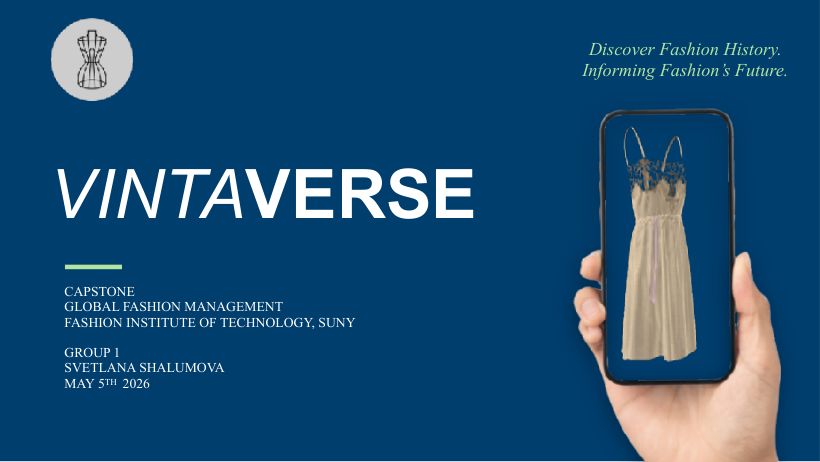
VintaVerse — 3D Digital Fashion Museum

Build a 3D 'digital fashion museum' that digitizes archive garments into rotatable models with VR/AR exhibits — plus a B2B2C model to sustain it.

What it achieved — Live on Vercel and pitched as B2B2C SaaS — the bet is that schools, museums and other institutions will pay to create and host their own digital archives, sustaining the museum as a platform rather than a one-off exhibition.

Svetlana Shalumova (Faculty, Fashion Design; Global Fashion Management MPS)

Read the case study

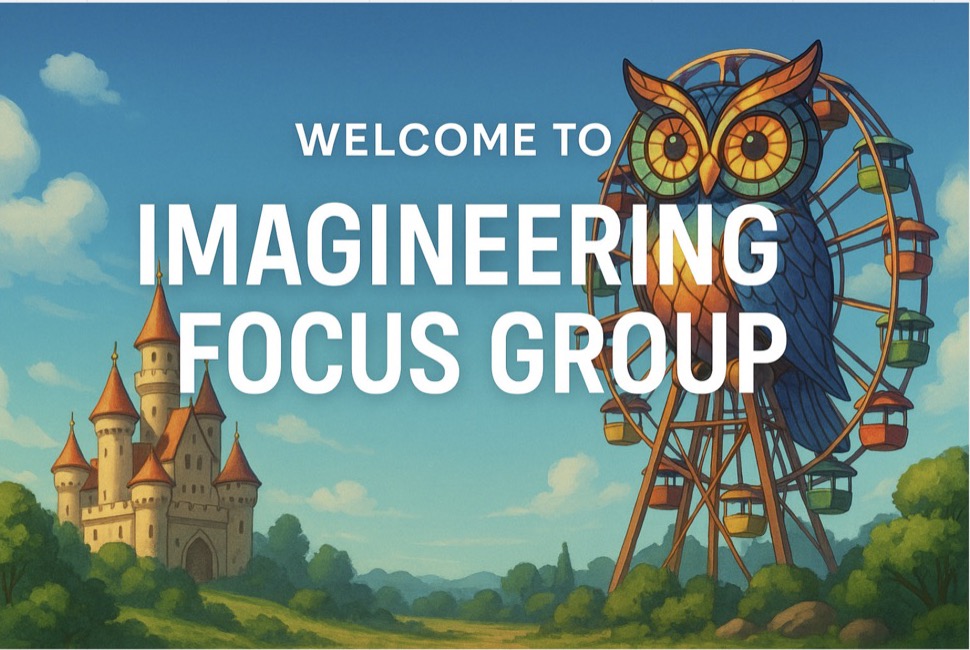
Words2Worlds — Worldbuilding Classes & Faculty Workshop

The FRS method for AI-era worldbuilding: a written idea carried, tool by tool, into a world you can stand inside — taught across the year and compressed into a single winter day for faculty.

What it achieved — One method, five registers: fantasy IP, branded character ecosystems, retail briefs, historical research, and the institution's own narrative — each carried from words to a standing world by the same pipeline. The January shift toward context engineering for experiential retail is the research edge FIT can build curriculum on, and the faculty workshop proved the method transfers in a single day.

Douglas Goldstein (method, classes & workshop)

Read the case study

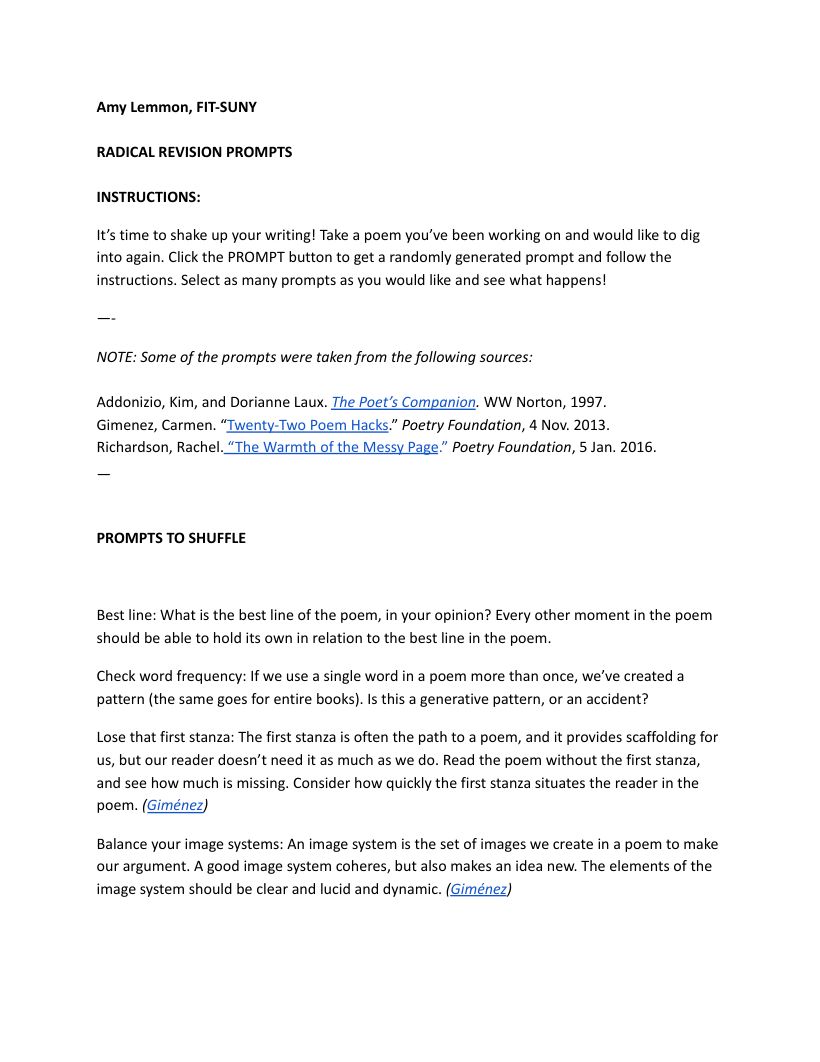
Radical Revision — Poetry Revision-Prompt Generator

Give poets a tool that shakes a draft loose — randomized 'radical revision' prompts on demand.

What it achieved — Randomization is the feature — a static list becomes a generative nudge that surprises the writer into a new approach on demand. A working model for AI in the humanities: new teaching tools without replacing the intellectual or creative work of the student.

Amy Lemmon (Professor, English and Communication Studies)

Read the case study

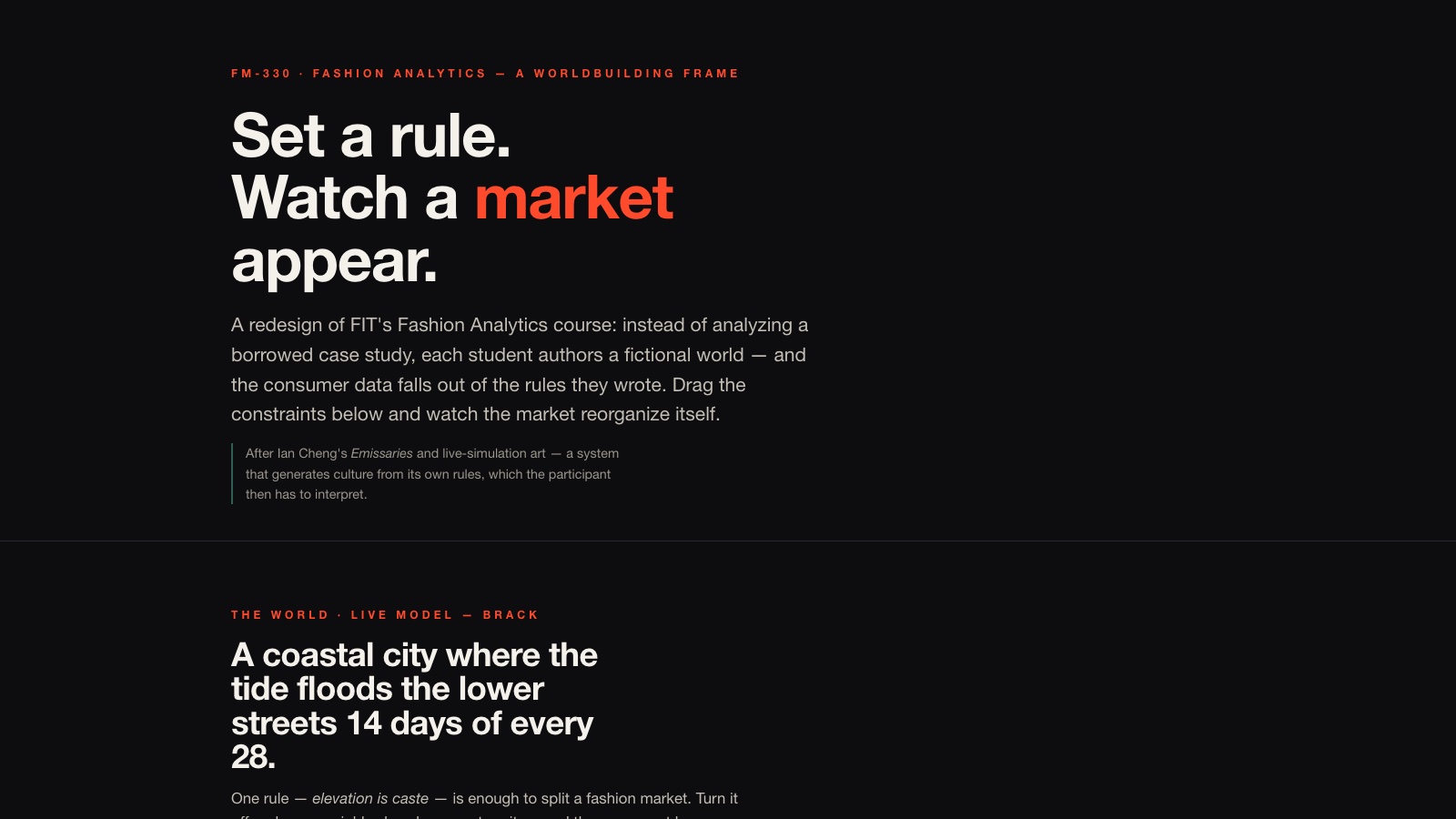
FM-330 — AI Curriculum Redesign

Redesign FM-330 so students author fictional ‘worlds’ and analyze the consumer data those worlds generate — a data course reframed as worldbuilding.

What it achieved — It turns a passive ‘read the case, answer the question’ course into ‘you authored this world, now explain what’s happening in it’ — while keeping the First Insight industry certification (the load-bearing Week-15 credential) fully intact, and converting the syllabus’s outright AI ban into a declared, auditable AI-as-instrument policy.

Tara Tsui (Professor)

Read the case study

Innovative Technology Club — Member Workshops

Bring hands-on emerging-tech workshops to the Innovative Technology Club's membership (with Wajeeha & James Melvin).

What it achieved — The session outlived the meeting — the workshop lives on as a deployed site members revisit and extend on their own time, turning a one-night club event into standing club infrastructure.

Innovative Technology Club

Read the case study

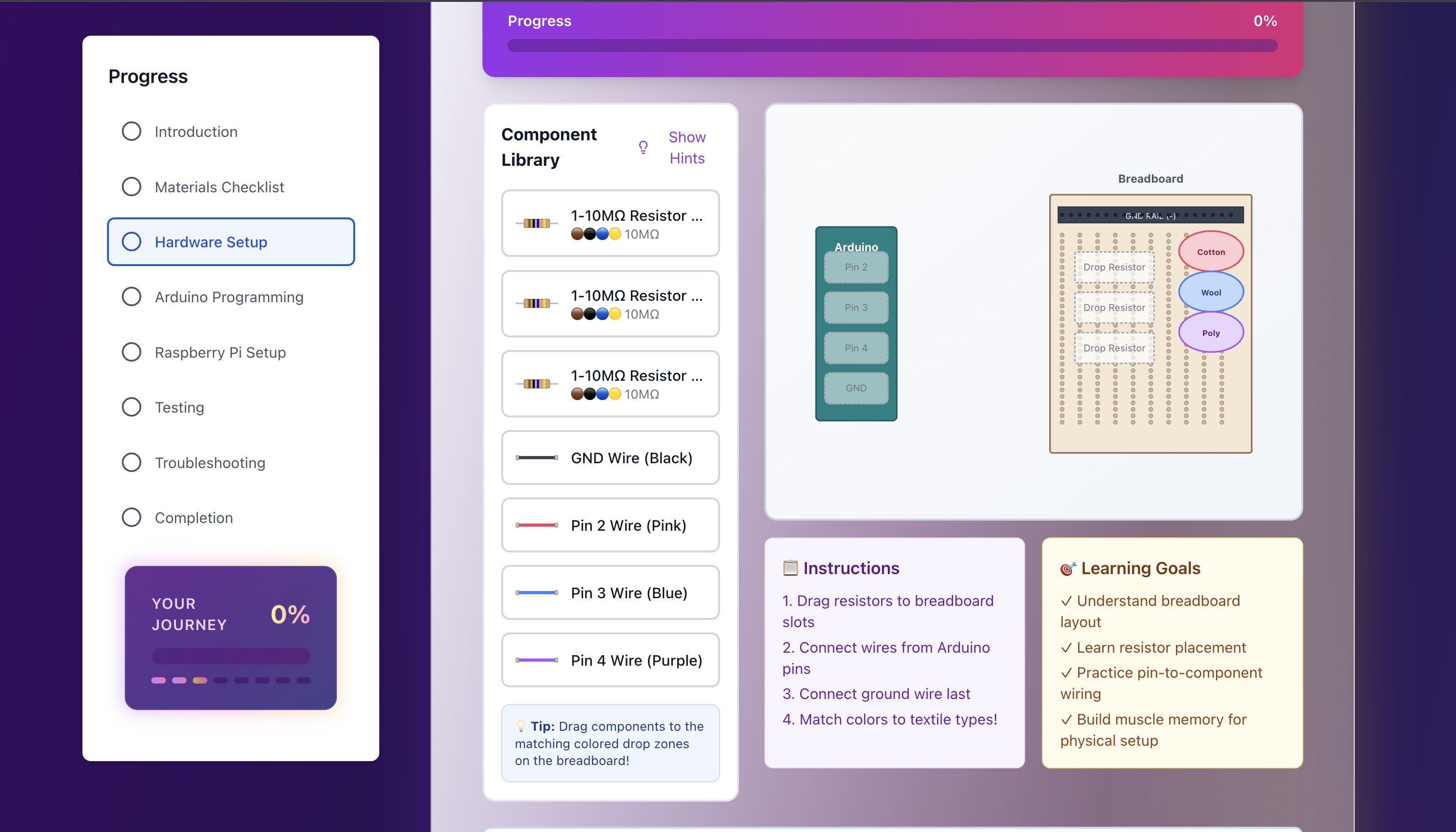
Physical Interactive Project — Crochet Sound-Textile

Make a textile you can hear — a crochet surface that teaches how different fabrics absorb and release sound.

What it achieved — Conductive-thread touch sensing and an Arduino-to-Raspberry-Pi audio chain turned the swatches into a playable surface — each material given its own 'frequency identity' in sound and visuals. Then the documentation itself shipped: DiscoTextile, a public eight-step interactive build guide, makes the whole installation reproducible by anyone with an afternoon — the project didn't just get documented, it became teachable.

Group 7: Nymali Verkitus

Read the case study

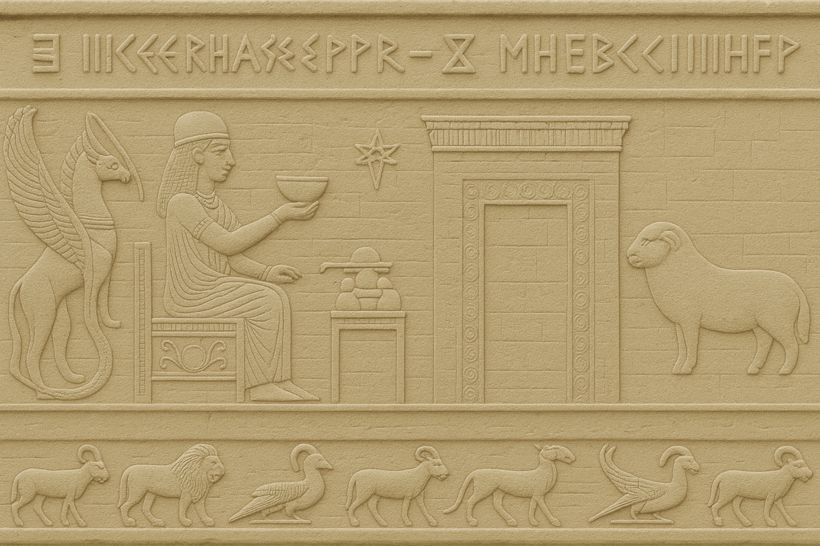
Reimagining the Ancient Near Eastern Cylinder Seal

Reinterpret an ancient Near Eastern cylinder seal as a 3D-printed object that still 'works' — rolling a legible relief into clay.

What it achieved — The negative-to-positive logic is the hard part — what reads on the cylinder must invert correctly when rolled, so clay-impression tests drove every iteration. Research-led experimentation connecting art history, generative AI, fabrication and hands-on material testing in one loop.

Leah Solomon (Student, Fashion Business Management)

Read the case study
Sven's Den (CylinderWarp)

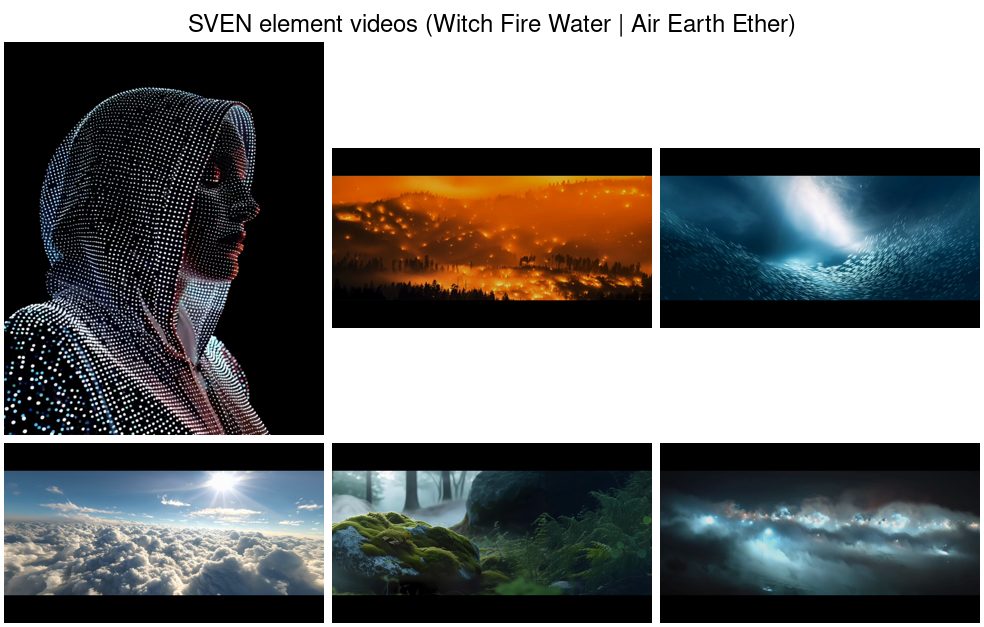
Build a live projection-mapping tool that warps elemental video loops (Fire/Water/Air/Earth/Ether/Witch) onto a curved, cylindrical surface.

What it achieved — Corner-pin plus adjustable cylindrical curvature is the trick that lets flat video sit believably on a curved, real-world surface. The larger demonstration: AI-assisted development putting a genuinely specialized interactive system within reach of a faculty exhibition build.

Sven Johnson (Faculty, Interior Design; Student, Exhibition and Experience Design MA)

Read the case study

Virtual Beings — Faculty Workshop

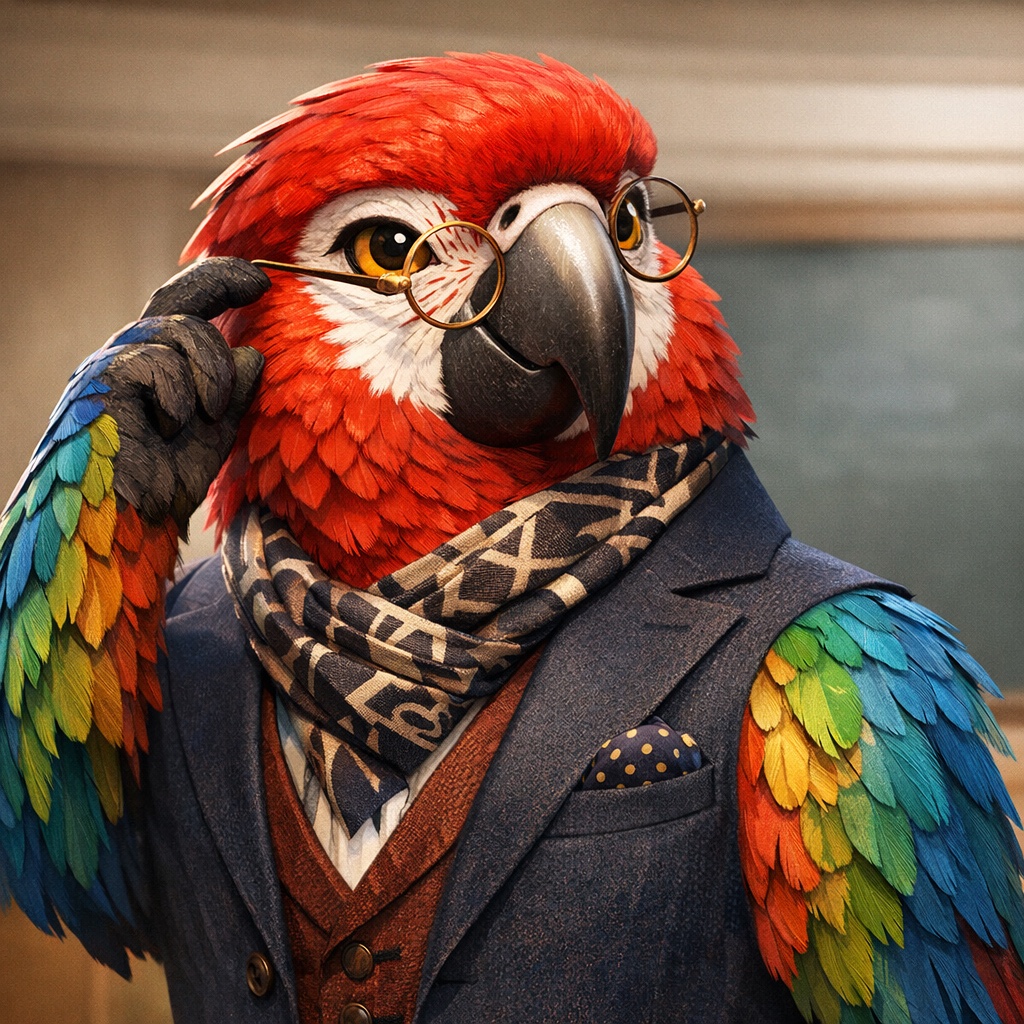
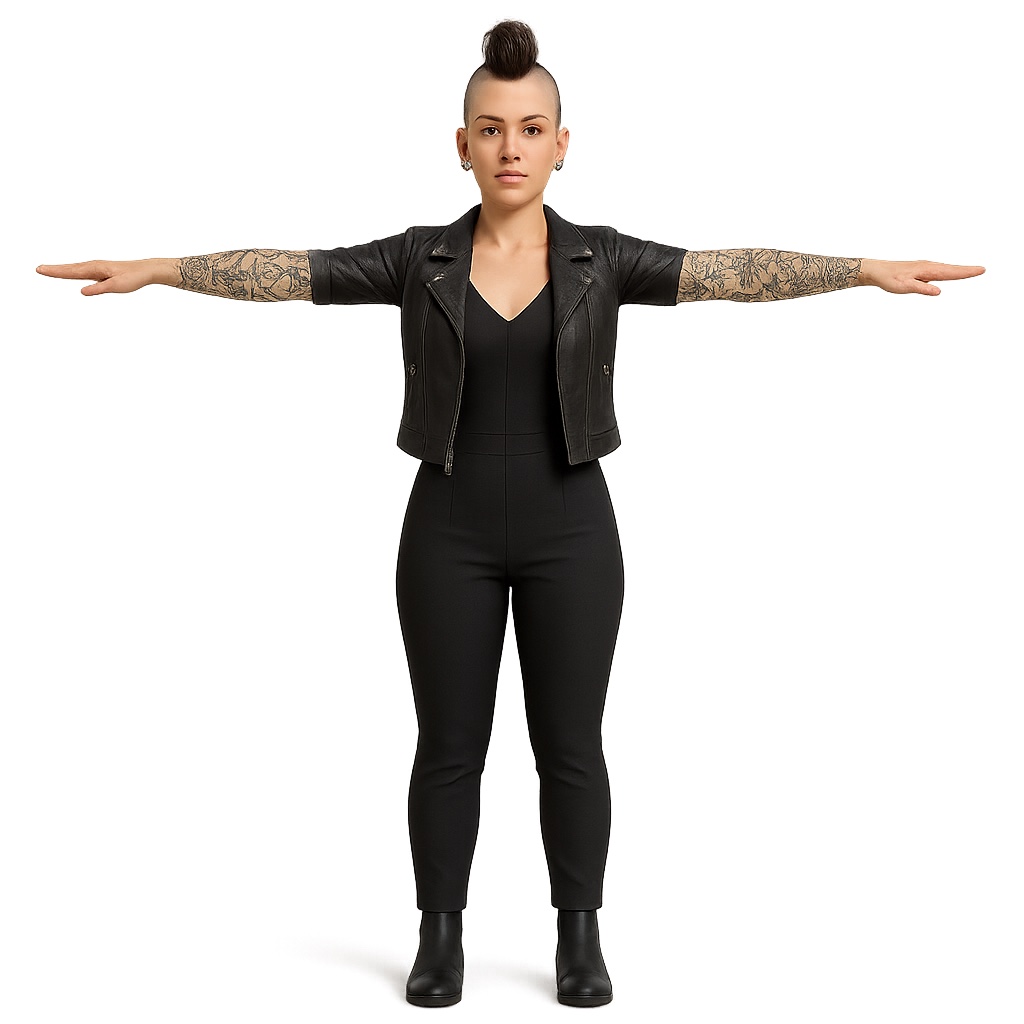
FIT faculty build virtual beings with their own hands — Hedra for the face, ChatGPT for the T-pose body, Meshy for the 3D lift — no experience necessary.

What it achieved — Faculty left with beings that walk — rigged, animated glTF characters they made themselves — and with the pipeline knowledge to bring the method back to their own classrooms.

Douglas Goldstein (series design & facilitation)

Read the case study