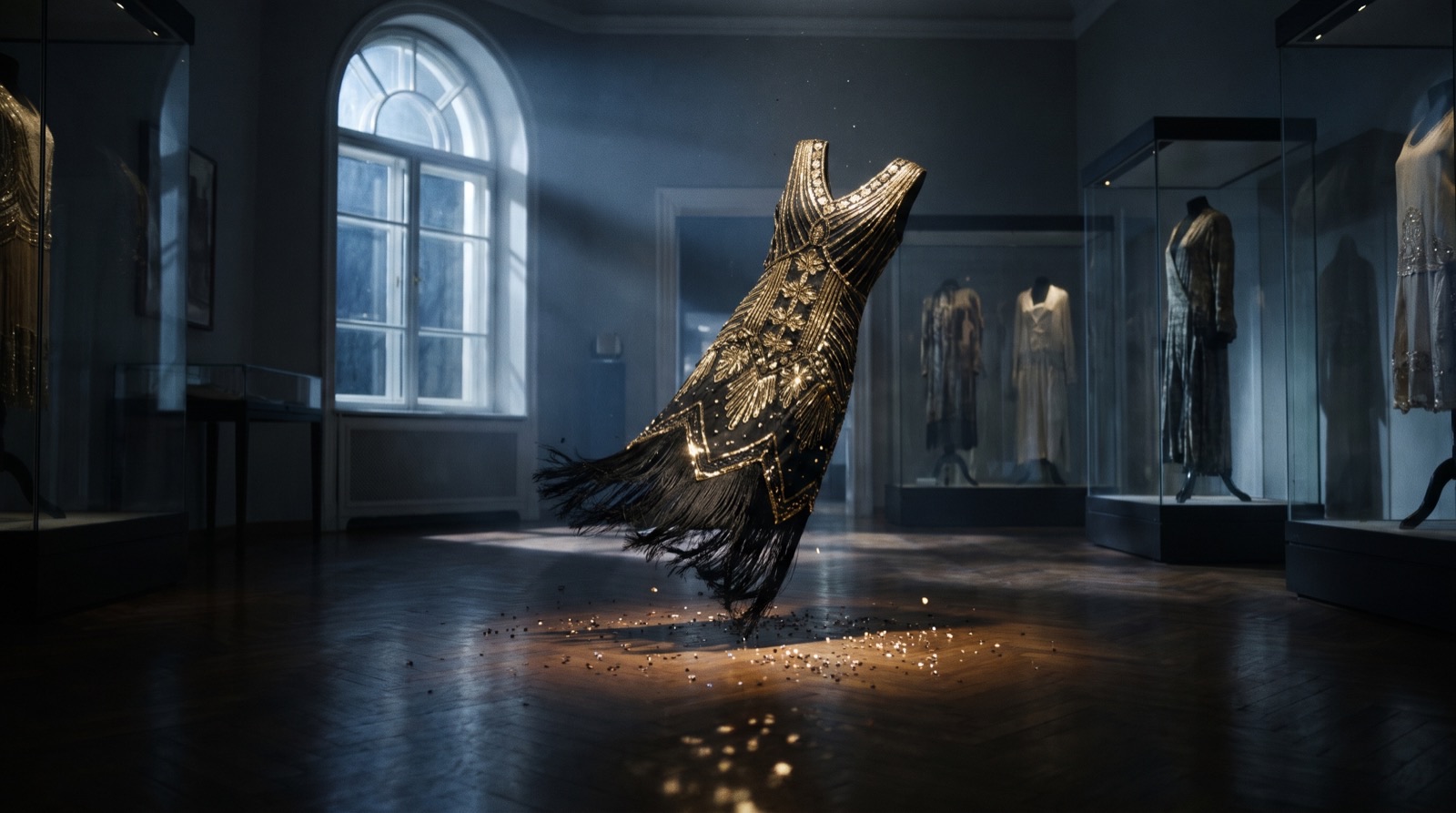
The Spark
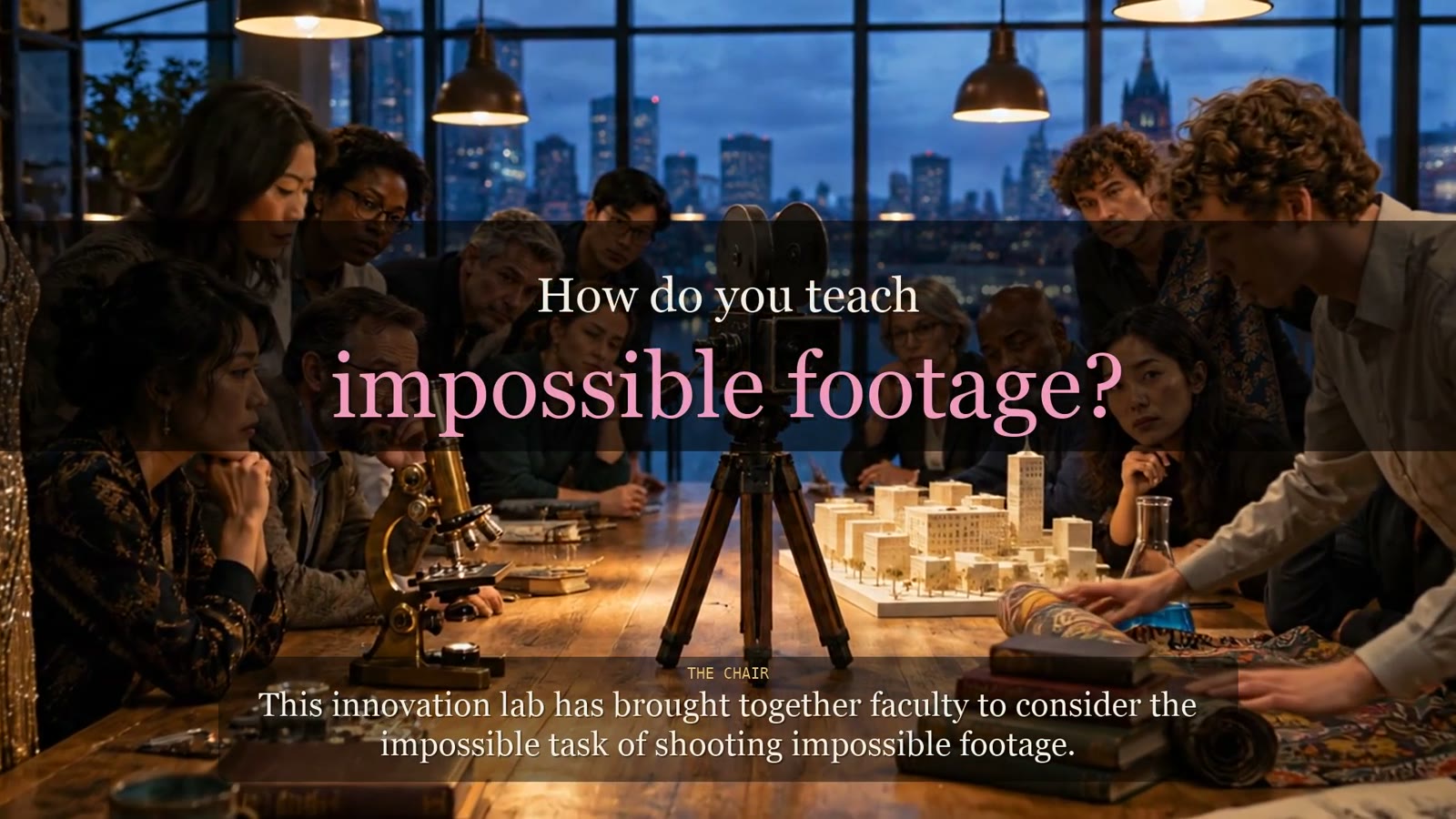
Faculty across FIT keep asking the same thing: can I make footage of something no camera could ever film — the inside of a heart, a whale in a classroom, a 1920s dress dancing in an empty museum? The workshop answer had to be a film that performs the question: it shows people how to make their own impossible footage, laughs at itself, and teaches the craft of cinema while it does it.
In Process
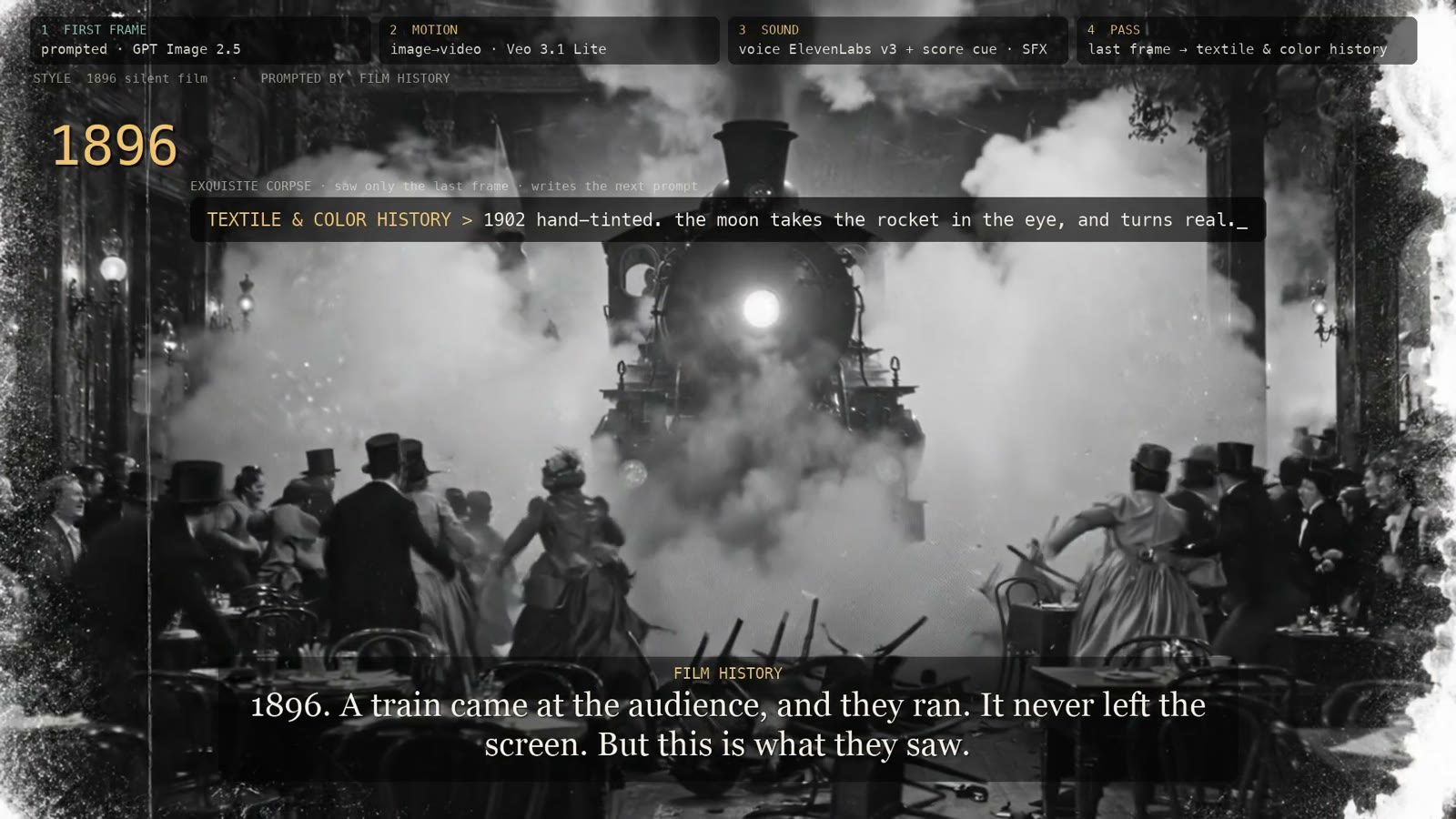
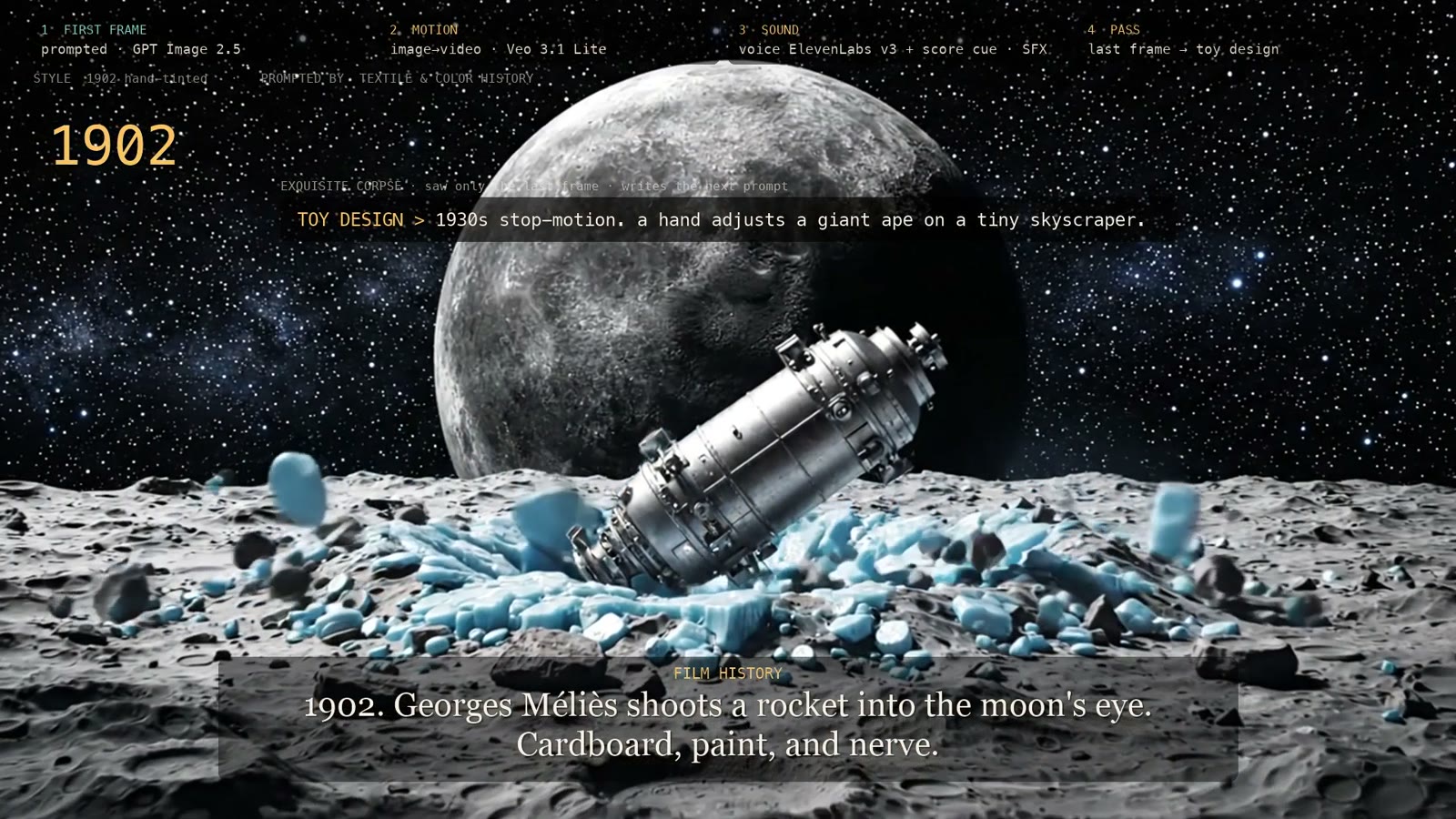
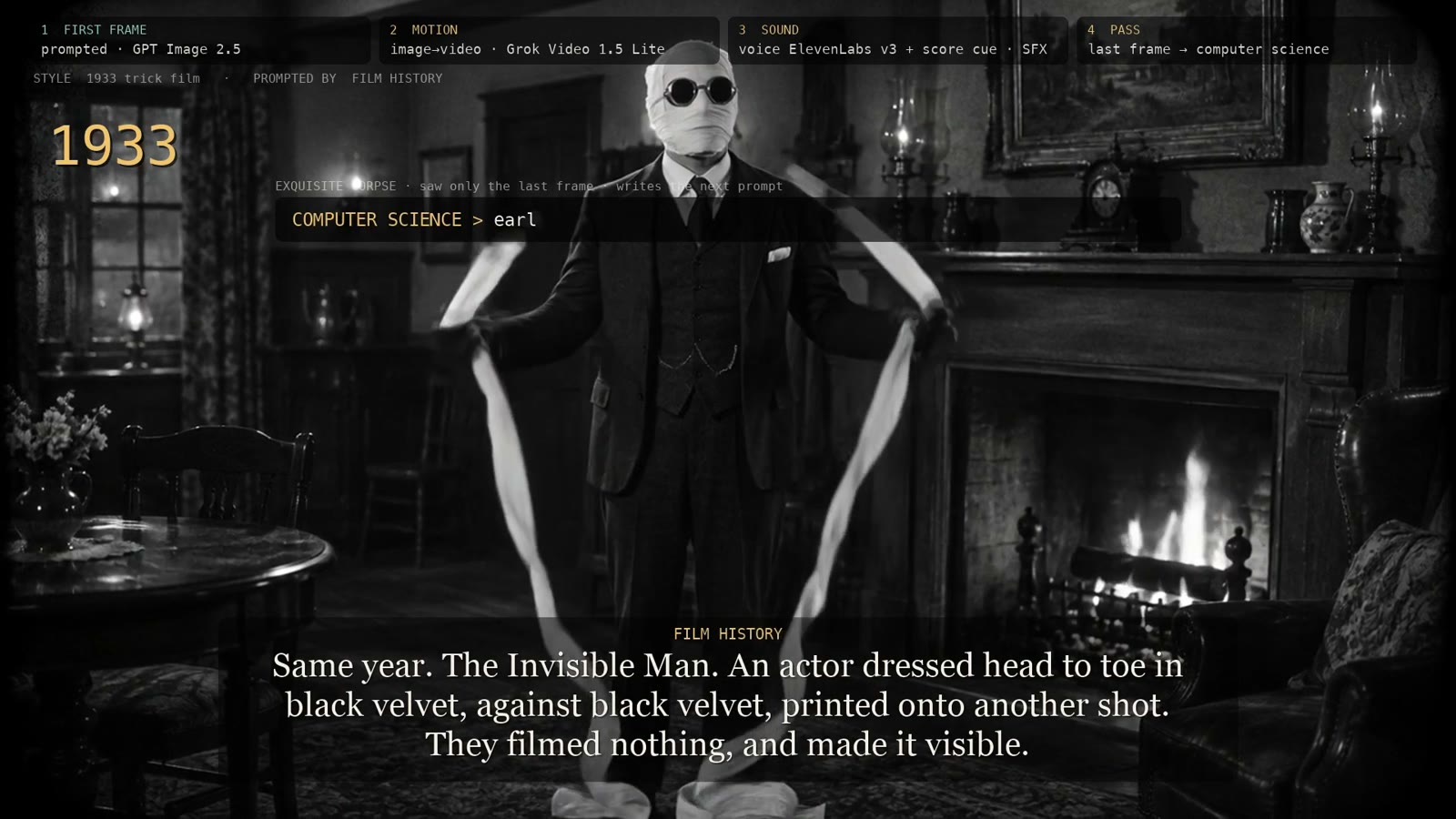
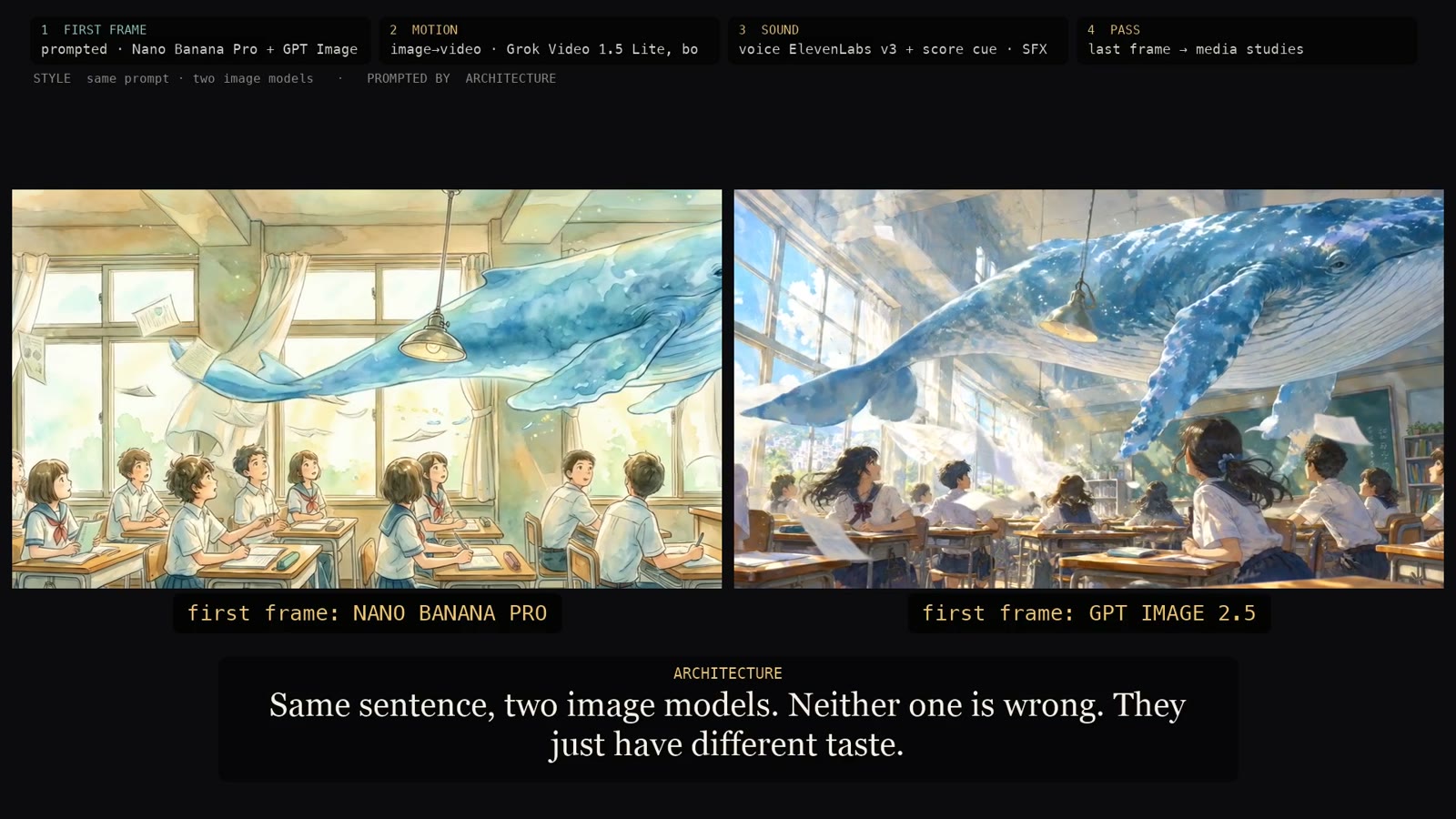
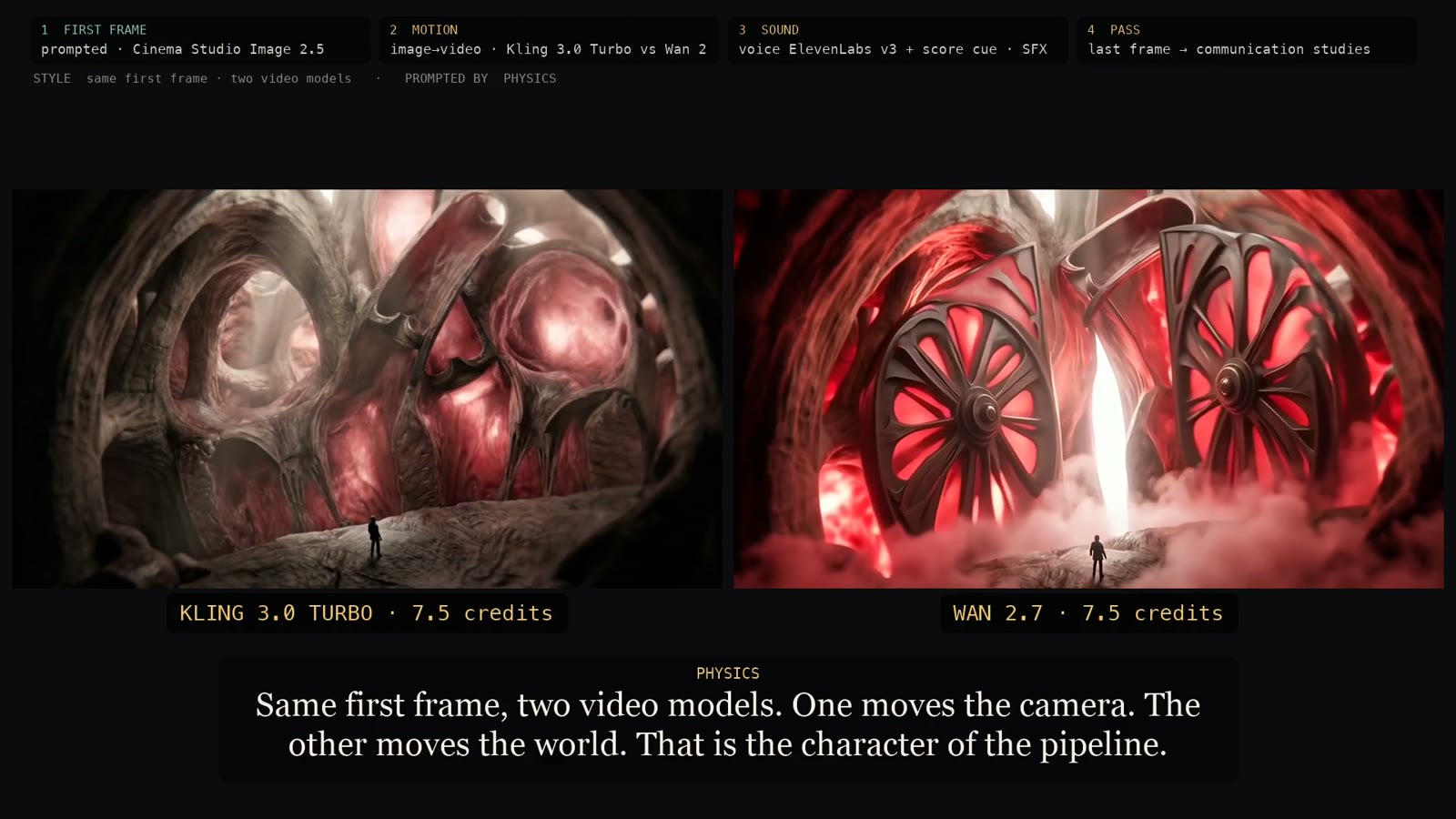
The premise is an exquisite corpse. Each professor sees only the last frame of the shot before and writes the next prompt in their own field's language — physics, nursing, law, poetry, urban history — and the prompt is always on screen, typing itself out before the next shot arrives. Every shot runs the same visible pipeline: a first frame generated as a still, image-to-video for motion, then voice, score, sound and the cut. Twice the film splits the screen to show the character of the pipeline: one sentence through two image models, then one first frame through two video models. Chapters on shot size, the 180-degree rule, lenses, light, color grades and storyboards each turn the same character into a lesson.
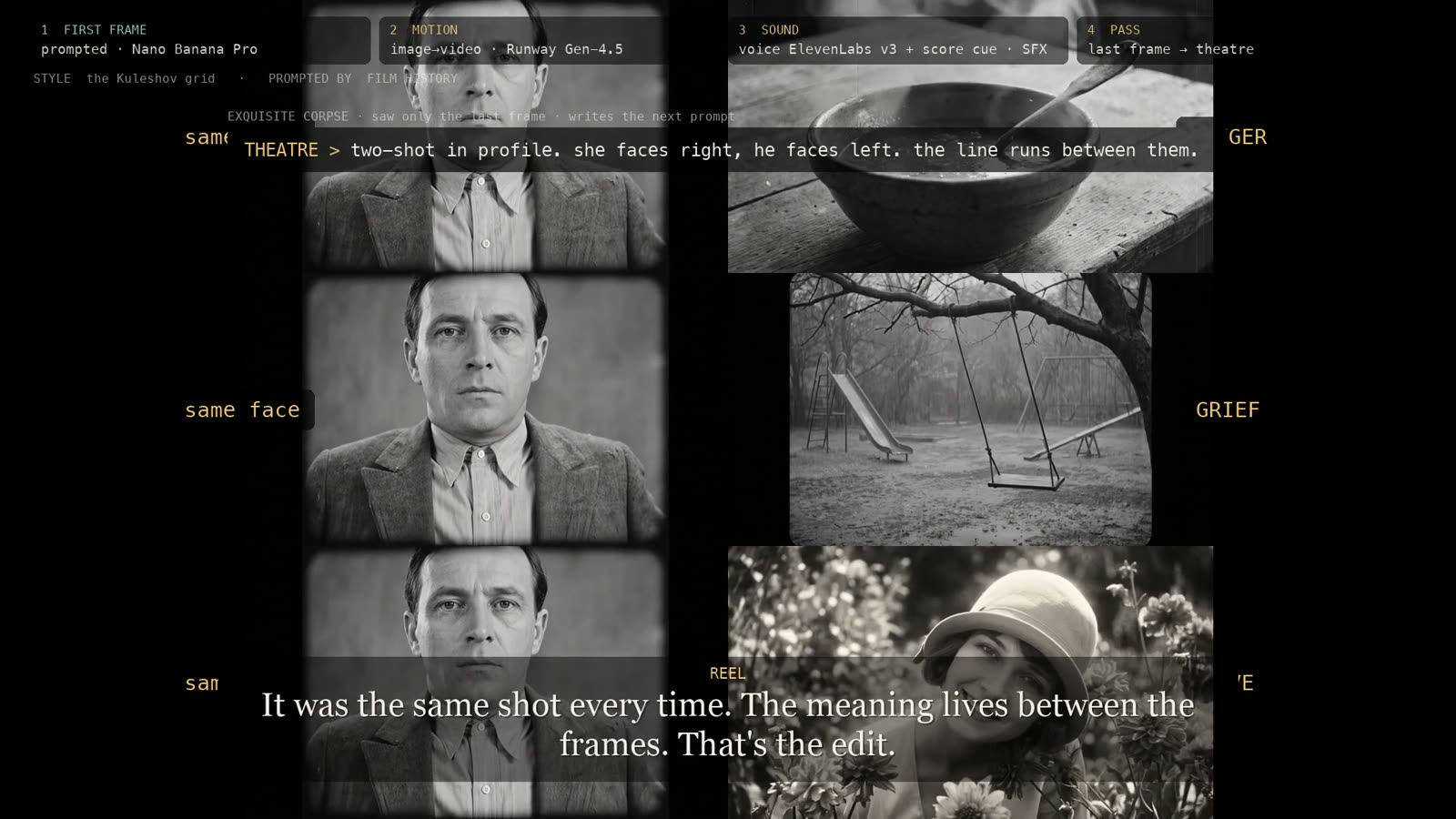
The Craft
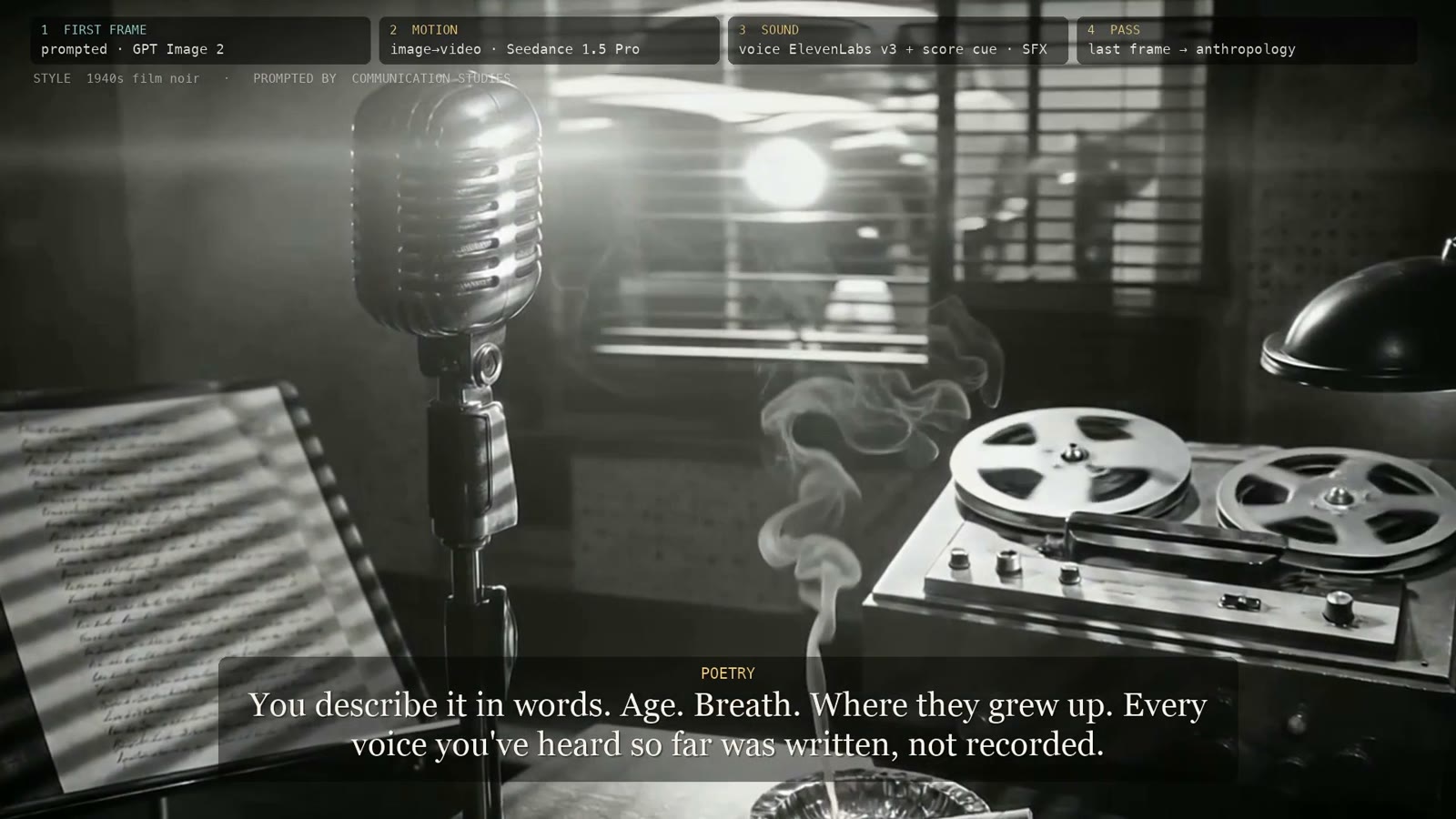
Twenty-seven styles in one film. Film history is amplified rather than recreated: the 1896 train breaks out of the screen into the theater, the hand-tinted Méliès moon winces at the rocket and turns into a real moon, and the 1933 Invisible Man's black-velvet trick is shown from behind the scenes. Then 1930s stop-motion, early-90s CGI, watercolor anime, film noir, VHS, Droste recursion and macro fluid photography, with a score that changes genre as the picture does. Fourteen video models and eleven image models share the work, so their range, character and price can be compared side by side, and nothing on screen is a still. The edit is code: a Python and FFmpeg compositor draws every caption, prompt and pipeline label, places the voice and sound cues, levels every speaker to one loudness and ducks the music under speech.
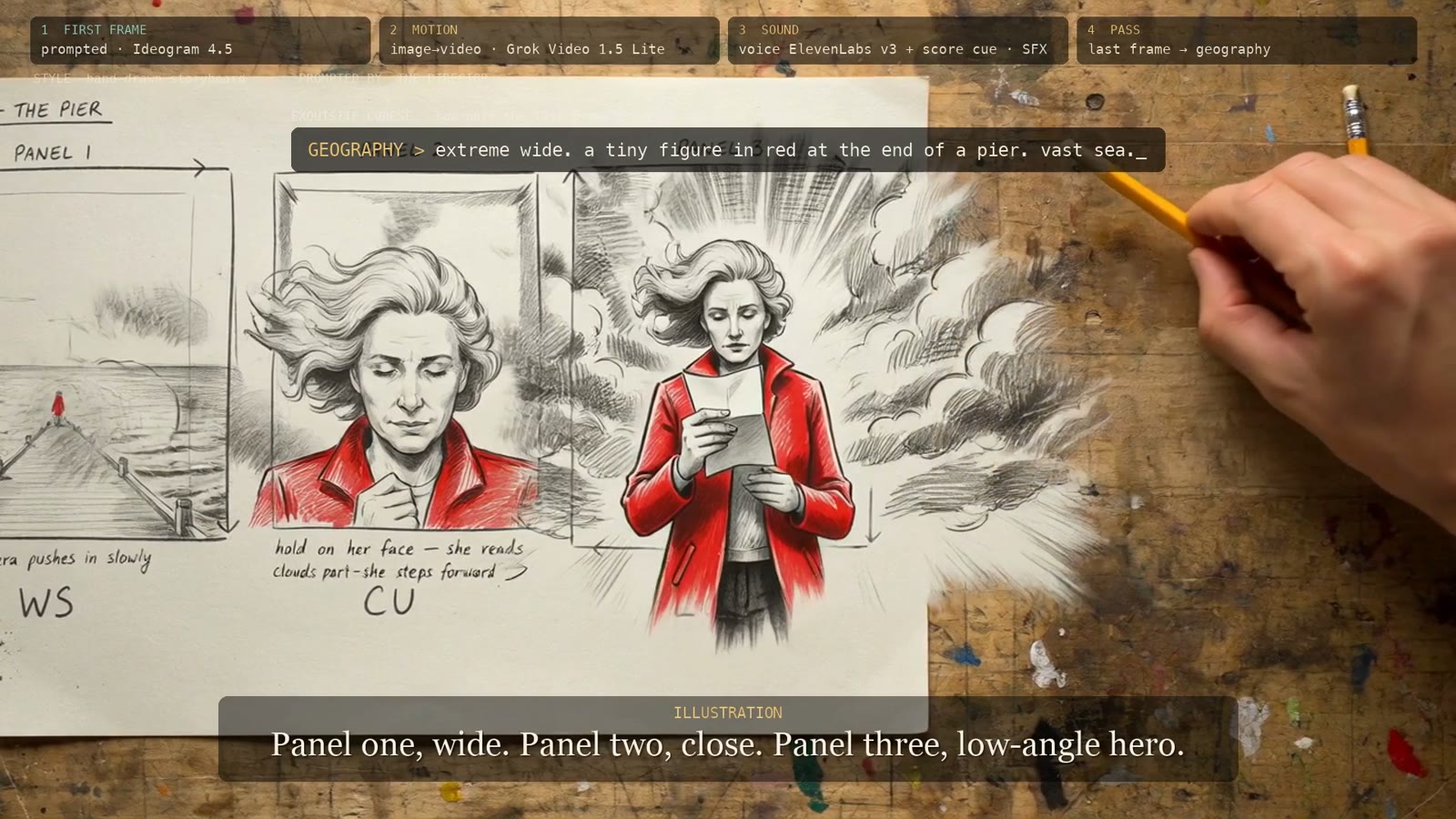
Outcome
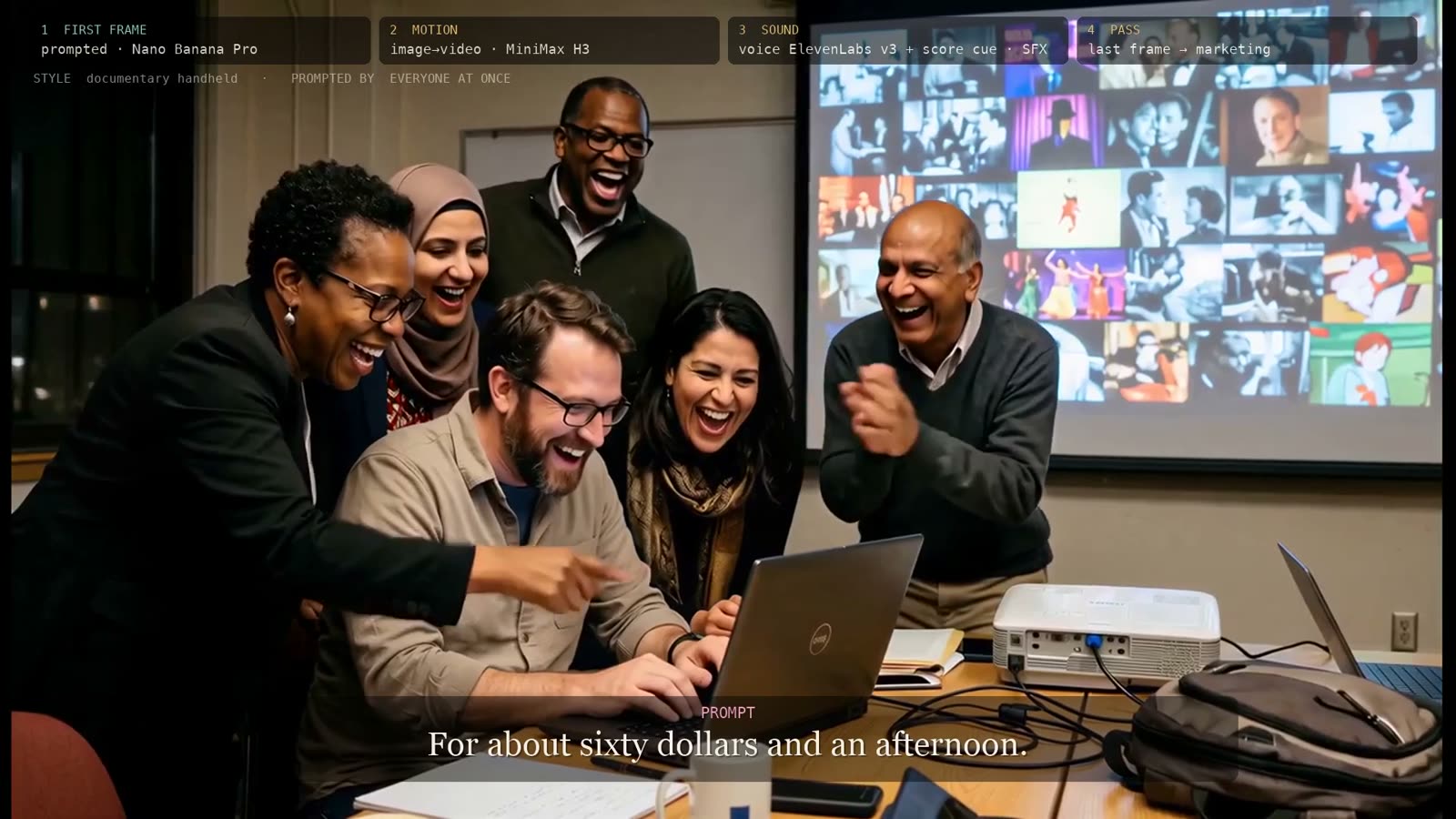
Eight and three-quarter minutes that land on the turn from impossible to possible: none of it could be filmed, and all of it exists now, one sentence at a time. It ends on the one rule that matters — if you make a face, ask first; if you make footage, label it. In the workshop, attendees then play the same exquisite-corpse game themselves, passing stills, prompts and voice lines around the room.
Pause & Predict
The film asks the room three questions. Pause on each and take answers before playing on — each timestamp jumps the film to its question.
What can't a camera film? Name one thing from your own field.
Before you prompt a single frame: who is the camera — voyeur, invited guest or trespasser?
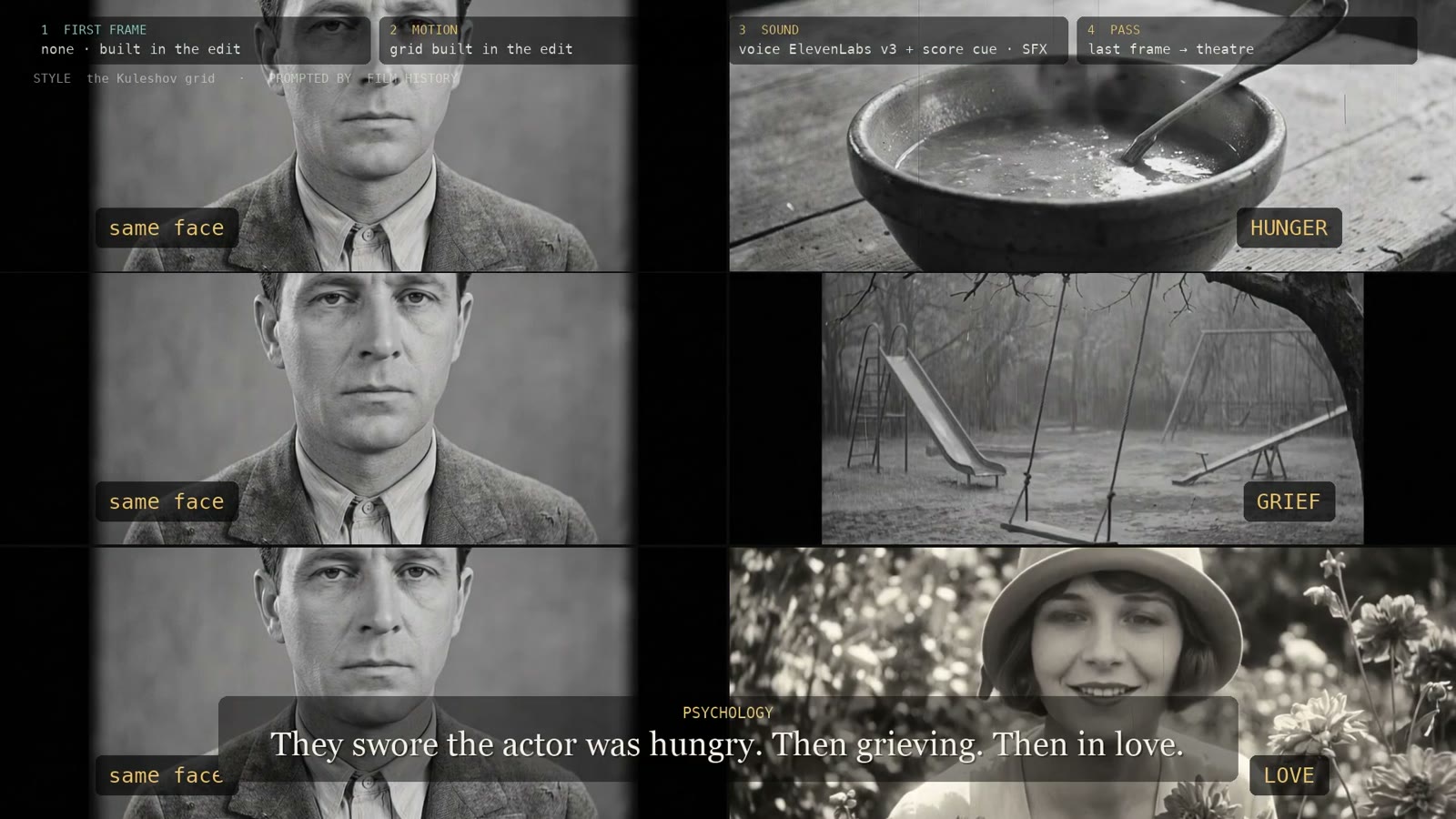
It's the same face every time. What is he feeling — and where did that feeling come from?
Process — 9 frames